Aim 1
Nature Recovery
Aim 1
Nature Recovery
Aim 1:
Nature Recovery
The South Downs National Park is a nature-rich, resilient working landscape where wildlife flourishes.
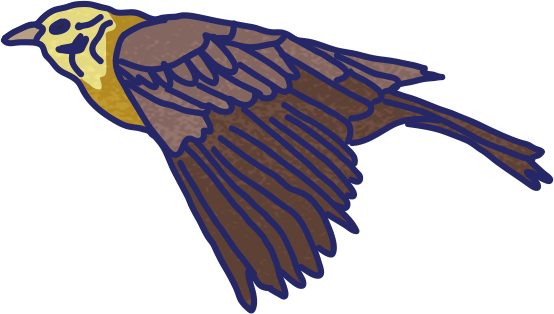
Click the yellowhammer to hear them sing.

Tap the yellowhammer to hear them sing.
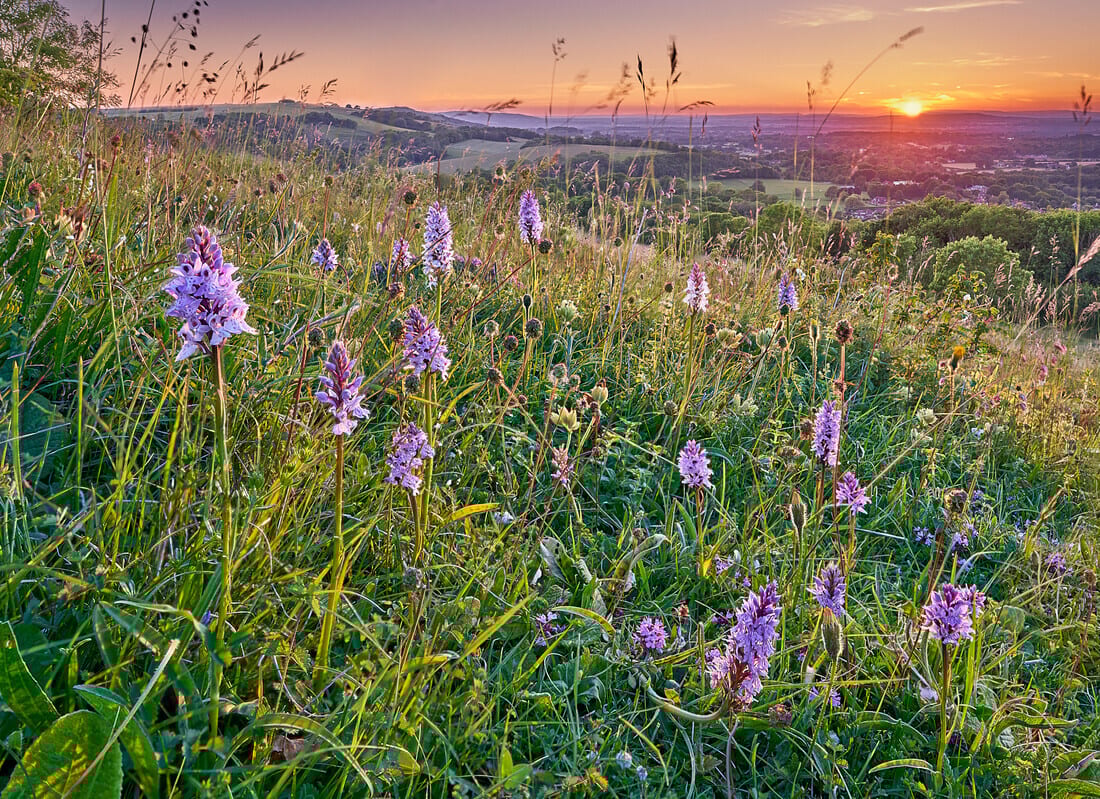
Nature is beautiful, inspiring and uplifting. It also underpins our lives – our communities, our economy, and our health and wellbeing.
It provides the air we breathe, the food we eat, the water we drink and the space in which we find health and wellbeing. Because these “natural assets” are free, it is too easy to take them for granted, not realising that we need nature as much as nature needs us.
We need a landscape rich in flourishing, expanded and connected habitats that is teeming with native wildlife. We can no longer rely on the edges and margins to provide this space. We need to find space for nature alongside the production of high-quality local food and drink, timber, and access to nature within thriving rural communities. All of this needs to be underpinned by a greener economy. This means our landscapes may look different in the future.
© Matthew Thomas
Around
of the South Downs National Park is farmed.
of land is made up of protected sites (6%) and priority habitats (c24%).
Read more about Nature Recovery
The UK government has set ambitious national targets for restoring nature. These targets will be delivered by Local Nature Recovery Strategies for each county. The South Downs National Park is covered by two Local Nature Recovery Strategies (LNRS) – one for Sussex (East and West combined) and one for Hampshire. These will set out how and where nature can be both created and restored. The National Park Authority, farmers, businesses and other partners are playing a crucial role in their development as they provide a blueprint for delivering nature recovery both inside and around the National Park:
Supporting farming and farm businesses is central to nature recovery.Farmers and land managers face a time of significant change: agri-environment schemes are being redesigned, world markets are uncertain and climate change impacts are being felt. Collaborative and innovative partnership working is already underway through farm clusters and other farming groups, and we must support and work with these key custodians for nature.
Alongside agri-environment schemes, private finance and grant funding are providing new and innovative vehicles to fund nature recovery while supporting viable farming businesses.

Read more about Nature Recovery
The South Downs National Park and other protected landscapes provide the best places to create flourishing and resilient nature, forming the basis of a nature recovery network across the UK. If not here, then where?
Fantastic work for nature is happening across the UK in response to the call for a “bigger, better, more joined-up approach”. Yet this has not managed to turn the tide and reverse those losses. In 2021 we launched our ReNature initiative with an ambitious target of creating 13,000 hectares of new habitat managed for nature and improving the condition of thousands of hectares of existing habitat. We are just over half-way there, with 6,766 hectares created, managed or secured for nature so far. We must now go further in our collective ambitions to “ReNature” the National Park. We need to be faster, smarter, bigger, better and more joined up if we are to reverse the decline in nature.
Innovation, experimentation, creative thinking and, most importantly, collaboration and energy, are required.
The South Downs National Park is a rich mosaic of different habitats – a vibrant nature network. This holds the key to its diversity of species, enabling species to move within the landscape and respond to climate change.
Getting the right habitat in the right place – for nature, farmers and people – is key. Most habitats will need regular management over time. So, new habitats need to be carefully placed and to work for those who will manage them.
Read more about Nature Recovery
The UK government has set ambitious national targets for restoring nature. These targets will be delivered by Local Nature Recovery Strategies for each county. The South Downs National Park is covered by two Local Nature Recovery Strategies (LNRS) – one for Sussex (East and West combined) and one for Hampshire. These will set out how and where nature can be both created and restored. The National Park Authority, farmers, businesses and other partners are playing a crucial role in their development as they provide a blueprint for delivering nature recovery both inside and around the National Park:
Supporting farming and farm businesses is central to nature recovery.Farmers and land managers face a time of significant change: agri-environment schemes are being redesigned, world markets are uncertain and climate change impacts are being felt. Collaborative and innovative partnership working is already underway through farm clusters and other farming groups, and we must support and work with these key custodians for nature.
Alongside agri-environment schemes, private finance and grant funding are providing new and innovative vehicles to fund nature recovery while supporting viable farming businesses.
Objective 1.1
To improve, expand, connect and increase the resilience of wildlife-rich habitats and land managed for nature to ensure we are on track to reach 60% managed for nature by 2060.
To create faster, smarter, bigger, better and more joined up nature recovery we need to look at opportunities for nature everywhere; creating new nature-rich places and improving and connecting existing habitats.
We are committed to supporting delivery of the UK’s international commitment to 30x30 as agreed at the UN Biodiversity Summit (COP15) in 2022 and enshrined in the 2023 Environmental Improvement Plan.
Targets for Objective 1.1
Target 1.1a: Protect and manage 30% of the National Park for nature by 2030 (30by30):
- PLTOF* Target 1: Restore or create more than 3,300ha hectares (2% of the National Park) of a range of wildlife-rich habitats within the South Downs National Park, outside protected sites by 2031.
- PLTOF* Target 2: Bring 80% of SSSIs features within the National Park into favourable condition by 2042. 50% by 2031, the end of the PMP.
Target 1.1b: By 2031, long-term monitoring data for South Downs priority species shows an increasing trend.
* The Government has developed the Protected Landscapes Targets and Outcomes Framework (PLTOF) with ten targets for protected landscapes.
Read more about Objective 1.1
The South Downs National Park is a rich mosaic of different habitats – a vibrant nature network. This holds the key to its diversity of species, enabling species to move within the landscape and respond to climate change.
Getting the right habitat in the right place – for nature, farmers and people – is key. Most habitats will need regular management over time. So, new habitats need to be carefully placed and to work for those who will manage them.
Read more about Objective 1.1
The South Downs National Park is a rich mosaic of different habitats – a vibrant nature network. This holds the key to its diversity of species, enabling species to move within the landscape and respond to climate change.
Getting the right habitat in the right place – for nature, farmers and people – is key. Most habitats will need regular management over time. So, new habitats need to be carefully placed and to work for those who will manage them.
Objective 1.2
To support land-based businesses to thrive as economically viable, nature-friendly, climate-positive food and drink producers.
Farmers are central to both food production and nature recovery. Most of the habitats in the National Park, including chalk grassland and lowland heath, rely on regular management by skilled farmers or land managers.
Delivering nature-rich habitats is underpinned by the regenerative farming techniques that farmers are already exploring to improve soil and water while increasing food production.
Targets for Objective 1.2
Target 1.2a: Increase rural business diversification that improves economic viability while enhancing nature recovery, landscape character preservation, and or aligning with regenerative tourism principles.
Read more about Objective 1.2
Farming and other land-based businesses in the National Park have a long history of diversification and innovation, combining new techniques, approaches and ideas with a deep understanding and experience of these landscapes and habitats.
They are also businesses that need to be financially viable. Farming is experiencing its biggest period of change in decades, with changing farming practices, and with new agri-environment schemes being developed alongside opportunities to fully integrate nature and climate delivery into productive, sustainable farming. This supports the need to move beyond the edges and margins if we are to truly turn the tide for nature.
Local food needs to be able to be sold locally with all the necessary infrastructure and supply chains required: from local abattoirs to food processing, distribution and shops selling goods directly to customers.
Read more about Objective 1.2
Farming and other land-based businesses in the National Park have a long history of diversification and innovation, combining new techniques, approaches and ideas with a deep understanding and experience of these landscapes and habitats.
They are also businesses that need to be financially viable. Farming is experiencing its biggest period of change in decades, with changing farming practices, and with new agri-environment schemes being developed alongside opportunities to fully integrate nature and climate delivery into productive, sustainable farming. This supports the need to move beyond the edges and margins if we are to truly turn the tide for nature.
Local food needs to be able to be sold locally with all the necessary infrastructure and supply chains required: from local abattoirs to food processing, distribution and shops selling goods directly to customers.
Using new initiatives including nature-based solutions and offsetting through private finance, we can support the development of a nature-rich, climate-positive and financially viable farming sector.
Read more about Objective 1.2
Farming and other land-based businesses in the National Park have a long history of diversification and innovation, combining new techniques, approaches and ideas with a deep understanding and experience of these landscapes and habitats.
They are also businesses that need to be financially viable. Farming is experiencing its biggest period of change in decades, with changing farming practices, and with new agri-environment schemes being developed alongside opportunities to fully integrate nature and climate delivery into productive, sustainable farming. This supports the need to move beyond the edges and margins if we are to truly turn the tide for nature.
Local food needs to be able to be sold locally with all the necessary infrastructure and supply chains required: from local abattoirs to food processing, distribution and shops selling goods directly to customers.
Regenerative farming
Local food needs to be able to be sold locally with all the necessary infrastructure and supply chains required: from local abattoirs to food processing, distribution and shops selling goods directly to customers.
Using new initiatives including nature-based solutions and offsetting through private finance, we can support the development of a nature-rich, climate-positive and financially viable farming sector.
What do we mean by regenerative agriculture?
Regenerative agriculture is approaches to farming and food production that enhance soil health, rebuild water and nutrient cycles, improve biodiversity, reconnect landscapes and revitalise communities.
Regenerative farming
Local food needs to be able to be sold locally with all the necessary infrastructure and supply chains required: from local abattoirs to food processing, distribution and shops selling goods directly to customers.
Using new initiatives including nature-based solutions and offsetting through private finance, we can support the development of a nature-rich, climate-positive and financially viable farming sector.
What do we mean by regenerative agriculture?
Regenerative agriculture is approaches to farming and food production that enhance soil health, rebuild water and nutrient cycles, improve biodiversity, reconnect landscapes and revitalise communities.
What do we mean by regenerative agriculture?
Regenerative agriculture is approaches to farming and food production that enhance soil health, rebuild water and nutrient cycles, improve biodiversity, reconnect landscapes and revitalise communities.
Objective 1.3
Improve and manage existing nature-rich sites – protected sites and priority habitats.
Our nature-rich sites are home to some of our rarest species. It is not enough for these sites to be identified and designated. They need ongoing and carefully balanced maintenance to remain nature-rich and in good condition. To properly care for these precious sites, the farmers and landowners who manage them need coordinated advice, support and resources on a site-by-site basis. It is also vital that we have a clear picture of their condition and the challenges that need to be addressed. While there is still work to be done to gather a full picture, we have identified a number of key issues, some of which are having a Park-wide impact.
Targets for Objective 1.3
Target 1.3a: (PLTOF Target 3)* For 60% of SSSIs within the National Park assessed as having ‘actions on track’ to achieve favourable condition by 31 January 2028.
Target 1.3b: (PLTOF Target 4)* Continuing favourable management of all existing priority habitat already in favourable condition outside of SSSIs (from a 2022 baseline) and increasing to include all newly restored or created habitat through agri-environment schemes by 2042.
* The Government has developed the Protected Landscapes Targets and Outcomes Framework (PLTOF) with ten targets for protected landscapes.
Read more about Objective 1.3
Management of chalk grassland and heathland
Heathlands and chalk grassland are some of the rarest and most biodiverse habitats on Earth. Chalk grassland, for example, can have 40 species of plants in just a square metre. They rely on careful management including grazing by the right type of animal at the right time of year.Small, fragmented chalk grassland sites and heathland sites on common land present different challenges to graze in a way that keeps the stock safe and healthy and that is financially viable for land managers. Grazing is vital to maintaining chalk grassland. Dogs not being kept under control can not only can lead to deadly dog attacks on livestock and wildlife, it can also mean that farmers are unable to graze important areas of chalk grassland – threatening the very existence of this nature-rich habitat that is such an integral part of the South Downs.
Woodland management
The South Downs has more woodland than any other National Park in England or Wales. Healthy woodlands are far more than trees. They have a rich understory that key species such as invertebrates, bats, butterflies and birds rely on.Small woodlands are important habitats and stepping stones for species but they are particularly difficult to manage because of cost pressures due to their small size. A healthy woodland requires active management and can be productively “cropped” like other land. A lack of expertise in woodland management can particularly affect smaller woods, impacting species diversity. A wider problem is the expanding population of deer, which browse on young tree saplings and woodland understory, preventing new trees from growing, and taking away vital habitats for key species, eventually leading to the death of woodland. Deer numbers are a real and increasing threat to achieving nature recovery in the National Park, and their numbers must be managed effectively if we are to achieve our shared objectives.
Read more about Objective 1.3
Management of chalk grassland and heathland
Heathlands and chalk grassland are some of the rarest and most biodiverse habitats on Earth. Chalk grassland, for example, can have 40 species of plants in just a square metre. They rely on careful management including grazing by the right type of animal at the right time of year.Small, fragmented chalk grassland sites and heathland sites on common land present different challenges to graze in a way that keeps the stock safe and healthy and that is financially viable for land managers. Grazing is vital to maintaining chalk grassland. Dogs not being kept under control can not only can lead to deadly dog attacks on livestock and wildlife, it can also mean that farmers are unable to graze important areas of chalk grassland – threatening the very existence of this nature-rich habitat that is such an integral part of the South Downs.
Woodland management
The South Downs has more woodland than any other National Park in England or Wales. Healthy woodlands are far more than trees. They have a rich understory that key species such as invertebrates, bats, butterflies and birds rely on.Small woodlands are important habitats and stepping stones for species but they are particularly difficult to manage because of cost pressures due to their small size. A healthy woodland requires active management and can be productively “cropped” like other land. A lack of expertise in woodland management can particularly affect smaller woods, impacting species diversity. A wider problem is the expanding population of deer, which browse on young tree saplings and woodland understory, preventing new trees from growing, and taking away vital habitats for key species, eventually leading to the death of woodland. Deer numbers are a real and increasing threat to achieving nature recovery in the National Park, and their numbers must be managed effectively if we are to achieve our shared objectives.
Read more about Objective 1.3
Management of chalk grassland and heathland
Heathlands and chalk grassland are some of the rarest and most biodiverse habitats on Earth. Chalk grassland, for example, can have 40 species of plants in just a square metre. They rely on careful management including grazing by the right type of animal at the right time of year. Small, fragmented chalk grassland sites and heathland sites on common land present different challenges to graze in a way that keeps the stock safe and healthy and that is financially viable for land managers. Grazing is vital to maintaining chalk grassland. Dogs not being kept under control can not only lead to deadly dog attacks on livestock and wildlife, it can also mean that farmers are unable to graze important areas of chalk grassland – threatening the very existence of this nature-rich habitat that is such an integral part of the South Downs.
Woodland management
The South Downs has more woodland than any other National Park in England or Wales. Healthy woodlands are far more than trees. They have a rich understory that key species such as invertebrates, bats, butterflies and birds rely on.Small woodlands are important habitats and stepping stones for species but they are particularly difficult to manage because of cost pressures due to their small size. A healthy woodland requires active management and can be productively “cropped” like other land. A lack of expertise in woodland management can particularly affect smaller woods, impacting species diversity. A wider problem is the expanding population of deer, which browse on young tree saplings and woodland understory, preventing new trees from growing, and taking away vital habitats for key species, eventually leading to the death of woodland. Deer numbers are a real and increasing threat to achieving nature recovery in the National Park, and their numbers must be managed effectively if we are to achieve our shared objectives.