

Aim 2
Climate Action



Aim 2
Climate Action
Aim 2:
Climate Action
The South Downs National Park is on track to become net zero by 2040 by mitigating and adapting to the impacts of climate change.

Tap the lapwing to hear their call.

Click the lapwing to hear their call.
Climate change is already having a fundamental effect on the National Park – on the landscape, habitats, species diversity, forestry, agriculture, food production, water resources, the rural economy and our local communities.
We need to effectively plan for these outcomes through mitigation and adaptation, and through building resilience in our landscape, biodiversity and communities.
Working in partnership is our greatest strength as a National Park. We will take climate action by bringing together all those needed to build climate resilience in our nature, our communities, our heritage and our rural economy. Together we will continue to find innovative, nature-based solutions, and new opportunities and ways to shift to a low-carbon future. We will do this by working proactively with our communities, our farmers and land managers, and other businesses.
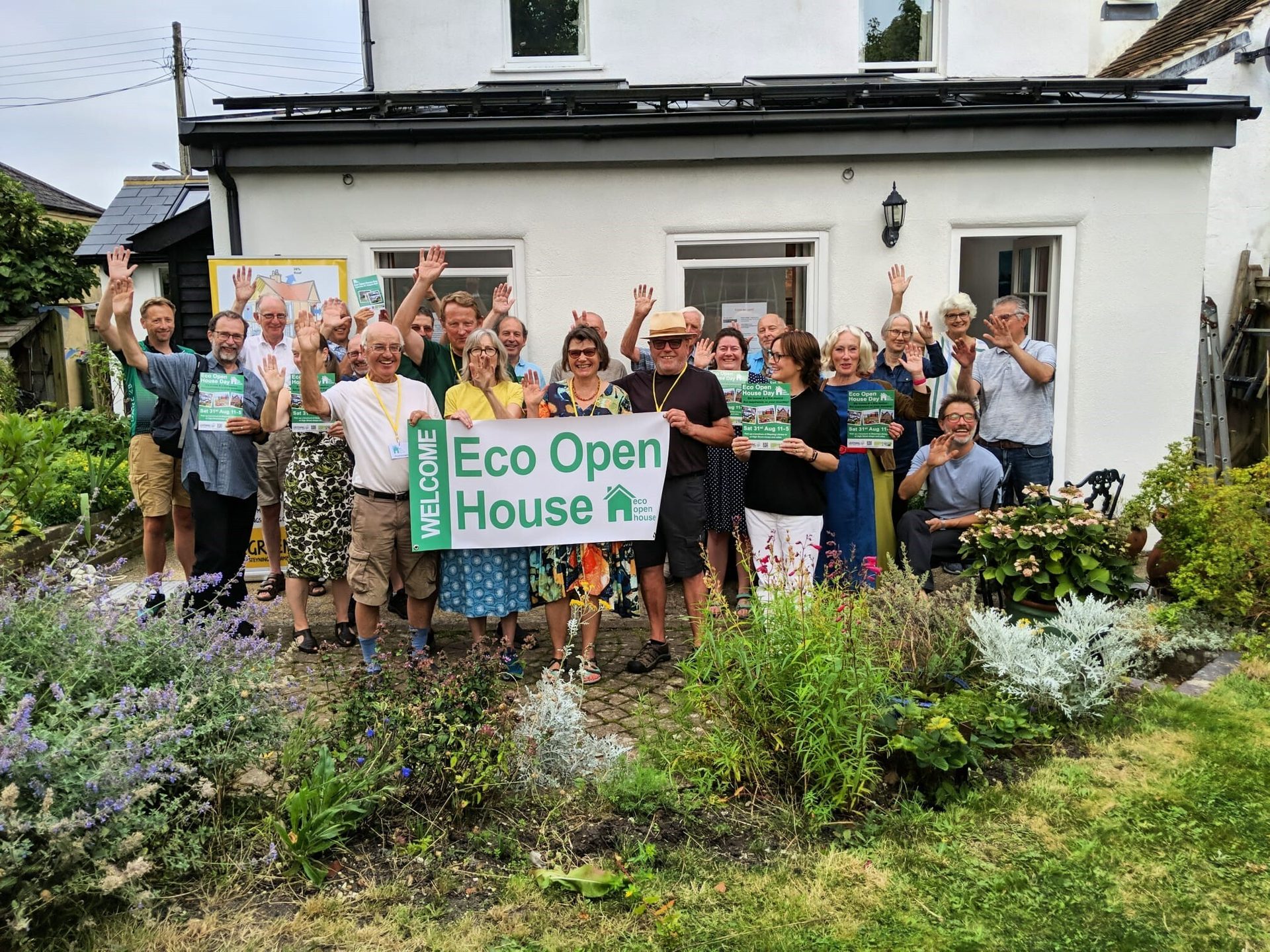
© Greening Steyning

Why is climate action so vital?
The effects of climate change are expected to intensify over time and could include more extreme weather events, increased risk of wildfire and drought, more flooding, declining soil fertility and other threats to food security, and damage to infrastructure and archaeological features. They will also mean the loss of nature – critical and beloved habitats and species will disappear.
Key terms:
Net zero: Net Zero means all sources of greenhouse gases are reduced as close to zero as possible and activities are encouraged which remove emissions from the atmosphere, to ensure there is no increase to the total amount of greenhouse gases in the atmosphere.
Mitigation: Actions aimed at reducing carbon and other greenhouse gas emissions to prevent or lessen the severity of climate change impacts.
Adaptation: Taking actions to prepare or adjust for current and projected impacts of climate change to reduce vulnerability and increase resilience to extreme weather and other climate-related risks.
Resilience: The ability to absorb, resist or recover from disturbances or damage from natural influences, human activities (including climate change) while continuing to provide ecosystem services.1
Nature-based solutions: working with nature to protect and enhance it in a way that helps tackle climate change while benefitting biodiversity and our wellbeing.
We are not working alone. Together with the 14 other National Parks across the UK we became the first National Parks in the world to join the United Nations backed “Race to Zero”1, committing to drive action to halve carbon emissions within our landscapes by 2030 and to become significant net carbon sinks by 2050.
The climate crisis can only be effectively tackled if we all work together with international, national, local and personal actions.
Why is climate action so vital?
The effects of climate change are expected to intensify over time and could include more extreme weather events, increased risk of wildfire and drought, more flooding, declining soil fertility and other threats to food security, and damage to infrastructure and archaeological features. They will also mean the loss of nature – critical and beloved habitats and species will disappear.
Key terms:
Net zero: Net Zero means all sources of greenhouse gases are reduced as close to zero as possible and activities are encouraged which remove emissions from the atmosphere, to ensure there is no increase to the total amount of greenhouse gases in the atmosphere.
Mitigation: Actions aimed at reducing carbon and other greenhouse gas emissions to prevent or lessen the severity of climate change impacts.
Adaptation: Taking actions to prepare or adjust for current and projected impacts of climate change to reduce vulnerability and increase resilience to extreme weather and other climate-related risks.
Resilience: The ability to absorb, resist or recover from disturbances or damage from natural influences, human activities (including climate change) while continuing to provide ecosystem services.1
Nature-based solutions: working with nature to protect and enhance it in a way that helps tackle climate change while benefitting biodiversity and our wellbeing.
We are not working alone. Together with the 14 other National Parks across the UK we became the first National Parks in the world to join the United Nations backed “Race to Zero”, committing to drive action to halve carbon emissions within our landscapes by 2030 and to become significant net carbon sinks by 2050.
The climate crisis can only be effectively tackled if we all work together with international, national, local and personal actions.
Why is climate action so vital?
The effects of climate change are expected to intensify over time and could include more extreme weather events, increased risk of wildfire and drought, more flooding, declining soil fertility and other threats to food security, and damage to infrastructure and archaeological features. They will also mean the loss of nature – critical and beloved habitats and species will disappear.
Key terms:
Net zero: Net Zero means all sources of greenhouse gases are reduced as close to zero as possible and activities are encouraged which remove emissions from the atmosphere, to ensure there is no increase to the total amount of greenhouse gases in the atmosphere.
Mitigation: Actions aimed at reducing carbon and other greenhouse gas emissions to prevent or lessen the severity of climate change impacts.
Adaptation: Taking actions to prepare or adjust for current and projected impacts of climate change to reduce vulnerability and increase resilience to extreme weather and other climate-related risks.
Resilience: The ability to absorb, resist or recover from disturbances or damage from natural influences, human activities (including climate change) while continuing to provide ecosystem services.1
Nature-based solutions: working with nature to protect and enhance it in a way that helps tackle climate change while benefitting biodiversity and our wellbeing.
We are not working alone. Together with the 14 other National Parks across the UK we became the first National Parks in the world to join the United Nations backed “Race to Zero”1, committing to drive action to halve carbon emissions within our landscapes by 2030 and to become significant net carbon sinks by 2050.
The climate crisis can only be effectively tackled if we all work together with international, national, local and personal actions.

Objective 2.1
To support businesses and local communities to take positive climate action to ensure they are adapted and resilient to climate change.
Together we want to support communities that are ready and willing to make a fast transition to ‘net zero’. We can use these communities as exemplars for others to learn from and follow.
We will support and promote best practice locally to encourage others to make a positive contribution to climate change action.
Targets for Objective 2.1
Target 2.1a: (Exceeds PLTOF 6)* Reduce net greenhouse gas emissions in South Downs National Park to net zero by 2040 relative to 1990 levels.
* The Government has developed the Protected Landscapes Targets and Outcomes Framework (PLTOF) with ten targets for protected landscapes. PLTOF Target 6 aims to reach net zero by 2050.
How we'll make this happen
The South Downs is the most populated National Park, with 113,300 residents and around 2 million people living within 10km of its boundary. The South Downs is also home to the biggest towns in any National Park. Lewes, Midhurst, Petworth and Petersfield are all wonderfully distinct towns that provide important hubs for the wider rural area. This represents a huge resource in terms of people, time and energy to deliver climate change action at a local level. Many community groups and parishes are already doing excellent work to make their local communities more resilient and sustainable in the longer term.1 We want to ‘add value’ to this local level action by involving communities within and adjoining the National Park.
Coming together, sharing knowledge and finding solutions together:
- The Authority has created the South Downs Climate Action Knowledge Hub to enable community groups, parish councils and local activists across and around the National Park. Communities need to join up and share challenges and successes of their climate action.
- Supporting communities to consider the future risks associated with climate change and consider what can be done to adapt or develop resilience.
- Encouraging wider volunteering capacity within parishes and local groups to enhance community resilience to potential climate change impacts.
- Working with local public health authorities to help them develop health impact assessments for climate change, and support local communities to understand and plan for these impacts.
- Ensuring emergency planning considers the needs of rural communities within the national park – flood protection, power outages, wildfires, landslips, storm damage etc.
Our Businesses:
One-third of all businesses in English National Parks are in the South Downs. These businesses add £533 million of economic value to the National Park. Together, businesses and visitors account for 50 per cent of carbon emissions in the National Park.
To reach net zero we must work together with businesses to create a greener and more sustainable economy while maintaining a thriving rural economy. Aim 7 is all about how we collectively support that thriving rural economy and community that underpins and makes our other aims possible:
- Growing and signing up to Our South Downs, the sustainably minded business network for the National Park.
- Increasing the sign up of businesses to verified sustainability certifications such as B Corp, Sustainable Wines GB and the National Park’s Green South Downs Sustainability Certification.
- Supporting farming businesses to diversify and become more sustainable.
Community Energy
- Encouraging and supporting the development of community-based energy planning.
- Supporting energy projects that build resilience and flexibility at local grid level so that communities are less impacted by grid outages.
Read more
Our Communities
The South Downs is the most populated National Park, with 113,300 residents and around 2 million people living within 10km of its boundary. The South Downs is also home to the biggest towns in any National Park. Lewes, Midhurst, Petworth and Petersfield are all wonderfully distinct towns that provide important hubs for the wider rural area. This represents a huge resource in terms of people, time and energy to deliver climate change action at a local level. Many community groups and parishes are already doing excellent work to make their local communities more resilient and sustainable in the longer term.1 We want to ‘add value’ to this local level action by involving communities within and adjoining the National Park.
Coming together, sharing knowledge and finding solutions together:
- The Authority has created the South Downs Climate Action Knowledge Hub to enable community groups, parish councils and local activists across and around the National Park. Communities need to join up and share challenges and successes of their climate action.
- Supporting communities to consider the future risks associated with climate change and consider what can be done to adapt or develop resilience.
- Encouraging wider volunteering capacity within parishes and local groups to enhance community resilience to potential climate change impacts.
- Working with local public health authorities to help them develop health impact assessments for climate change, and support local communities to understand and plan for these impacts.
- Ensuring emergency planning considers the needs of rural communities within the national park – flood protection, power outages, wildfires, landslips, storm damage etc.
Community Energy
- Encouraging and supporting the development of community-based energy planning.
- Supporting energy projects that build resilience and flexibility at local grid level so that communities are less impacted by grid outages.
Our Businesses
One-third of all businesses in English National Parks are in the South Downs. These businesses add £533 million of economic value to the National Park. Together, businesses and visitors account for 50 per cent of carbon emissions in the National Park.
To reach net zero we must work together with businesses to create a greener and more sustainable economy while maintaining a thriving rural economy. Aim 7 is all about how we collectively support that thriving rural economy and community that underpins and makes our other aims possible:
- Growing and signing up to Our South Downs, the sustainably minded business network for the National Park.
- Increasing the sign up of businesses to verified sustainability certifications such as B Corp, Sustainable Wines GB and the National Park’s Green South Downs Sustainability Certification.
- Supporting farming businesses to diversify and become more sustainable.
Read more
Our Communities
The South Downs is the most populated National Park, with 113,300 residents and around 2 million people living within 10km of its boundary. The South Downs is also home to the biggest towns in any National Park. Lewes, Midhurst, Petworth and Petersfield are all wonderfully distinct towns that provide important hubs for the wider rural area. This represents a huge resource in terms of people, time and energy to deliver climate change action at a local level. Many community groups and parishes are already doing excellent work to make their local communities more resilient and sustainable in the longer term. We want to ‘add value’ to this local level action by involving communities within and adjoining the National Park.
Coming together, sharing knowledge and finding solutions together:
- The Authority has created the South Downs Climate Action Knowledge Hub to enable community groups, parish councils and local activists across and around the National Park. Communities need to join up and share challenges and successes of their climate action.
- Supporting communities to consider the future risks associated with climate change and consider what can be done to adapt or develop resilience.
- Encouraging wider volunteering capacity within parishes and local groups to enhance community resilience to potential climate change impacts.
- Working with local public health authorities to help them develop health impact assessments for climate change, and support local communities to understand and plan for these impacts.
- Ensuring emergency planning considers the needs of rural communities within the national park – flood protection, power outages, wildfires, landslips, storm damage etc.
Community Energy
- Encouraging and supporting the development of community-based energy planning.
- Supporting energy projects that build resilience and flexibility at local grid level so that communities are less impacted by grid outages.
Our Businesses
One-third of all businesses in English National Parks are in the South Downs. These businesses add £533 million of economic value to the National Park. Together, businesses and visitors account for 50 per cent of carbon emissions in the National Park.
To reach net zero we must work together with businesses to create a greener and more sustainable economy while maintaining a thriving rural economy. Aim 7 is all about how we collectively support that thriving rural economy and community that underpins and makes our other aims possible:
- Growing and signing up to Our South Downs, the sustainably minded business network for the National Park.
- Increasing the sign up of businesses to verified sustainability certifications such as B Corp, Sustainable Wines GB and the National Park’s Green South Downs Sustainability Certification.
- Supporting farming businesses to diversify and become more sustainable.
Objective 2.2
To support land managers, farmers, foresters and landowners in their aspirations to deliver nature recovery and climate action on their land.
Together we must continue to work alongside farmers and landowners to increase climate mitigation and adaptation efforts, developing adaptation responses that also support the economic viability of farming and other rural businesses.
Targets for Objective 2.2
Target 2.2a: PLTOF Target 5*: Ensuring at least 65% to 80% of land managers adopt nature friendly farming on at least 10% to 15% of their land by 2030.
Target 2.2b: Implement regenerative farming practices across 8,000 hectares of the National Park by 2031.
Target 2.2c: (Exceeds PLTOF Target 8): Increase tree canopy and woodland cover across the National Park by 2,625ha by 2031.
* The Government has developed the Protected Landscapes Targets and Outcomes Framework (PLTOF) with ten targets for protected landscapes.
Read more about Objective 2.2
The South Downs National Park has been heavily influenced by farming and 70 per cent remains a farmed landscape. Farming practices such as livestock grazing have led to the development of some of our key habitats including chalk grassland.
Farming continues to have a critical role to play in managing land for nature. It faces increasing, and at times conflicting, demands for sustainably grown food for a growing population and climate action.
While farmers have a huge role to play in fighting climate change, they are also on the front lines of dealing with its impacts. It has a direct effect on the land and soils they rely on for their livelihood and on water in the landscape – increasing both drought and flooding. The risks to the sector are significant and supporting them to become more resilient achieves multiple benefits – for food production, for the landscape and nature, and for the rural economy.
National Parks and other protected landscapes have a key role to play in working with farmers, landowners and developers to demonstrate practical implementation at scale. In the South Downs we will continue to support our ReNature Credits approach, tapping into the increasing potential of private-finance to fund nature-based solutions that are good for nature, people and the planet.
Together we will focus on a number of key areas:
- The development and delivery of sector-based resilience plans.
- Continuing to support and expand the ReNature Credits approach in the South Downs to connect farming businesses with private finance for climate solutions.
- Support landowners looking to create new woodland, providing organisations around the National Park with access to local carbon credits and enabling long-term carbon sequestration.
- Working together to continue to develop a Voluntary Biodiversity Credits market, understanding its role in capturing carbon, to enable organisations to support both carbon sequestration and nature recovery as part of their commitment to climate action.
- Ensuring that farmers have the advice and support they need on nature-friendly farming.
Read more about Objective 2.2
The South Downs National Park has been heavily influenced by farming and 70 per cent remains a farmed landscape. Farming practices such as livestock grazing have led to the development of some of our key habitats including chalk grassland.
Farming continues to have a critical role to play in managing land for nature. It faces increasing, and at times conflicting, demands for sustainably grown food for a growing population and climate action.
While farmers have a huge role to play in fighting climate change, they are also on the front lines of dealing with its impacts. It has a direct effect on the land and soils they rely on for their livelihood and on water in the landscape – increasing both drought and flooding. The risks to the sector are significant and supporting them to become more resilient achieves multiple benefits – for food production, for the landscape and nature, and for the rural economy.
National Parks and other protected landscapes have a key role to play in working with farmers, landowners and developers to demonstrate practical implementation at scale. In the South Downs we will continue to support our ReNature Credits approach, tapping into the increasing potential of private-finance to fund nature-based solutions that are good for nature, people and the planet.
Together we will focus on a number of key areas:
- The development and delivery of sector-based resilience plans.
- Continuing to support and expand the ReNature Credits approach in the South Downs to connect farming businesses with private finance for climate solutions.
- Support landowners looking to create new woodland, providing organisations around the National Park with access to local carbon credits and enabling long-term carbon sequestration.
- Working together to continue to develop a Voluntary Biodiversity Credits market, understanding its role in capturing carbon, to enable organisations to support both carbon sequestration and nature recovery as part of their commitment to climate action.
- Ensuring that farmers have the advice and support they need on nature-friendly farming.
Read more about Objective 2.2
The South Downs National Park has been heavily influenced by farming and 70 per cent remains a farmed landscape. Farming practices such as livestock grazing have led to the development of some of our key habitats including chalk grassland.
Farming continues to have a critical role to play in managing land for nature. It faces increasing, and at times conflicting, demands for sustainably grown food for a growing population and climate action.
While farmers have a huge role to play in fighting climate change, they are also on the front lines of dealing with its impacts. It has a direct effect on the land and soils they rely on for their livelihood and on water in the landscape – increasing both drought and flooding. The risks to the sector are significant and supporting them to become more resilient achieves multiple benefits – for food production, for the landscape and nature, and for the rural economy.
National Parks and other protected landscapes have a key role to play in working with farmers, landowners and developers to demonstrate practical implementation at scale. In the South Downs we will continue to support our ReNature Credits approach, tapping into the increasing potential of private-finance to fund nature-based solutions that are good for nature, people and the planet.
Together we will focus on a number of key areas:
- The development and delivery of sector-based resilience plans.
- Continuing to support and expand the ReNature Credits approach in the South Downs to connect farming businesses with private finance for climate solutions.
- Support landowners looking to create new woodland, providing organisations around the National Park with access to local carbon credits and enabling long-term carbon sequestration.
- Working together to continue to develop a Voluntary Biodiversity Credits market, understanding its role in capturing carbon, to enable organisations to support both carbon sequestration and nature recovery as part of their commitment to climate action.
- Ensuring that farmers have the advice and support they need on nature-friendly farming.