

Aim 3
Clean Water

Aim 3
Clean Water
Aim 3:
Clean Water
Clean, abundant water supports nature and communities in the South Downs National Park and beyond.
Click the heron for sound effects.

Tap the heron for sound effects.
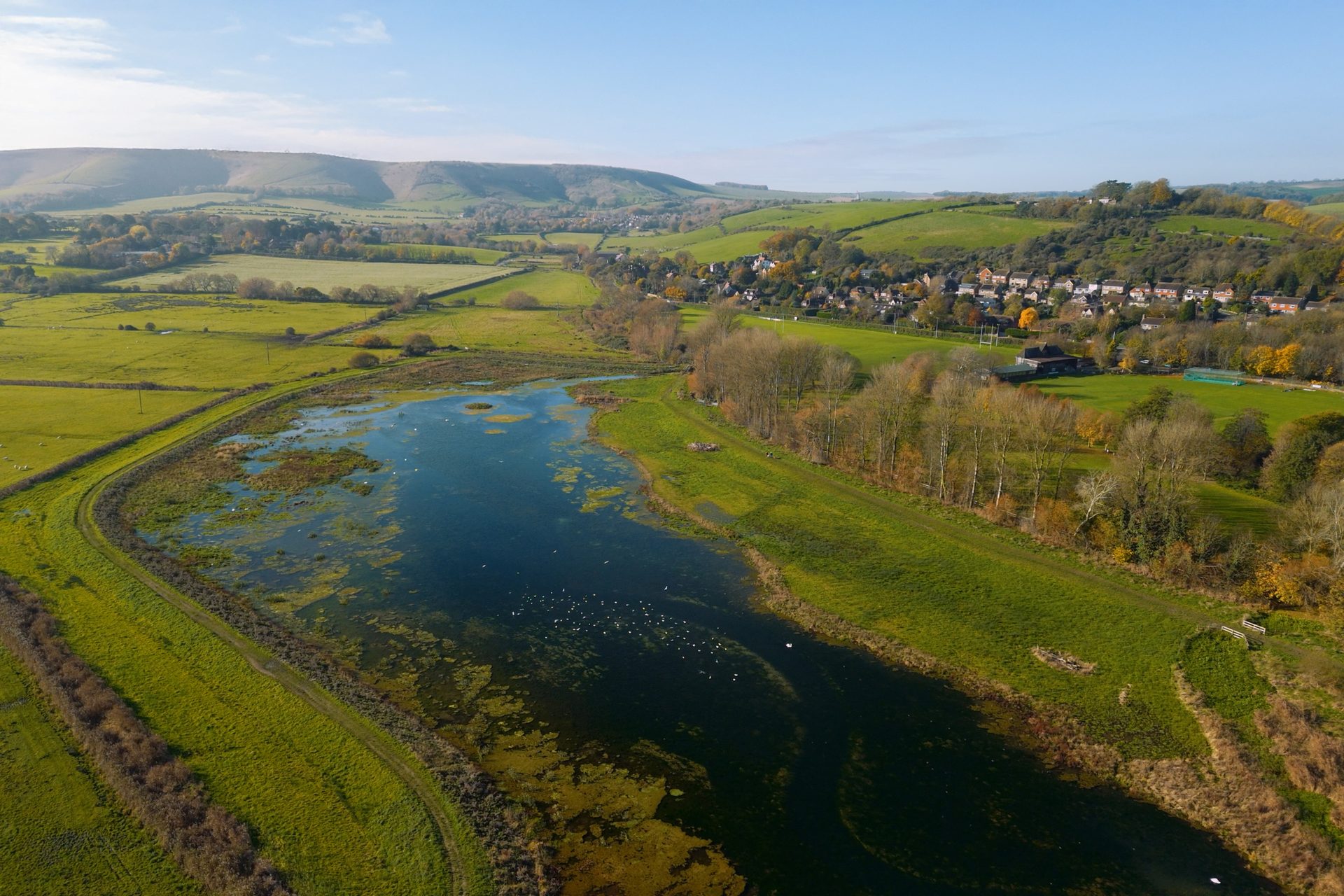
Water underpins biodiversity, landscape, and the social and economic wellbeing of communities in and around the South Downs National Park, supporting its special qualities.
Addressing water issues is complex because it requires a range of approaches, from individual action to national policies and regulation.
Action to improve water quality and quantity will require work with partners within and across the boundary of the National Park. It will need action from a variety of partners including water companies, developers, planners, industry, landowners and farmers, and householders. Together we are committed to a catchment-based approach that will enable us to work together with partners and the public to restore our diverse water habitats and ensure enough clean water for nature and people.
© Sam Moore

Why is water so vital?
The South Downs is full of incredible blue spaces vital to nature and people – rivers, chalk streams, ponds, coastline and a huge chalk aquifer that provides water to more than 1.2 million people in and around the National Park.
Unfortunately, like in so many parts of the UK, these water environments are under increasing threats from a number of different factors, from pollution to climate change affecting rainfall and water temperatures. The south east of England is also a water-stressed region – meaning that we must look at managing water quantity as well as water quality. Everyone has a role to play in using less water.
Chalk streams are particularly important in the National Park. There are only 200 chalk streams in the world and most of those can be found in southern England. They have been described as the “English Great Barrier Reef” thanks to their biodiversity. The Rivers Itchen and Meon are chalk streams fed with clear water by the same chalk aquifer that supplies our drinking water.
The porous nature of the chalk landscape means that ponds, such as dew ponds, are a unique source of water for wildlife where no other surface water is present, providing important homes for rare and endangered wildlife.
The National Park has 17.5 miles of coastline along the iconic Sussex Heritage Coast, one of the few undeveloped areas of England’s south-east coastline. This area is home to rare habitats such as salt marsh, mud flats and vegetated shingle. The Heritage Coast extends out into the ocean. The landscape is deeply connected to this marine environment, with the rivers of the National Park flowing into the sea and having an impact on its health. This marine environment also has rare habitats and species including sea kelp and seahorses.
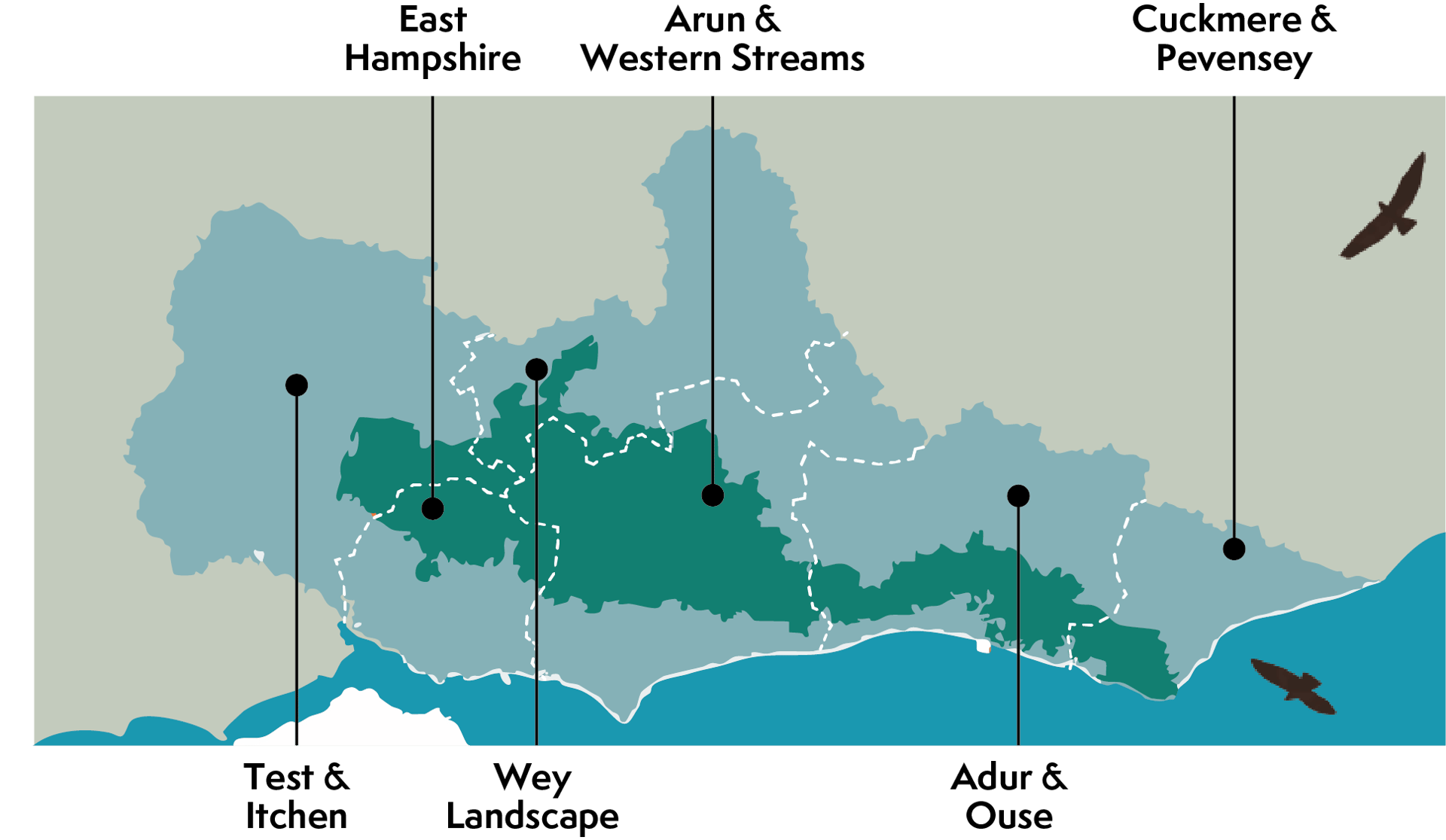
Water also does not stop at designation boundaries. As can be seen from Figure 6 below, the river catchments of the National Park expand far beyond the boundary.
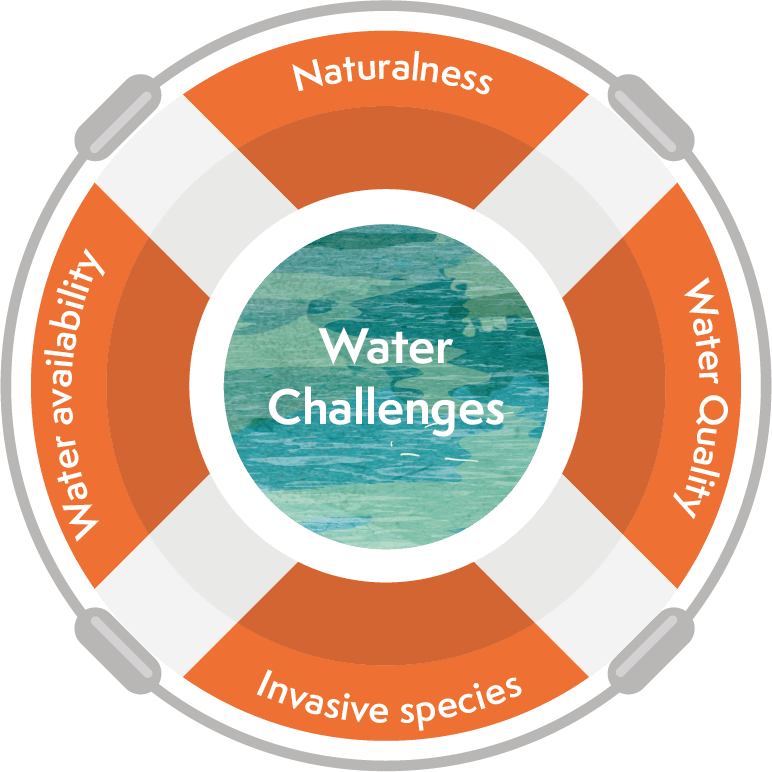
Challenges facing water in the South Downs National Park
Over abstraction and saline intrusion impact the amount of water available.
Can spread quicly edging our or predating on native species.
Pollution sources include sewage, road run off and agriculture.
Water systems are dynamic and if they are stopped from changing, wetland habitats will be restricted and cut off.
Water systems are dynamic and if they are stopped from changing, wetland habitats will be restricted and cut off.
Why is water so vital?
The South Downs is full of incredible blue spaces vital to nature and people – rivers, chalk streams, ponds, coastline and a huge chalk aquifer that provides water to more than 1.2 million people in and around the National Park.
Unfortunately, like in so many parts of the UK, these water environments are under increasing threats from a number of different factors, from pollution to climate change affecting rainfall and water temperatures. The south east of England is also a water-stressed region – meaning that we must look at managing water quantity as well as water quality. Everyone has a role to play in using less water.
Chalk streams are particularly important in the National Park. There are only 200 chalk streams in the world and most of those can be found in southern England. They have been described as the “English Great Barrier Reef” thanks to their biodiversity. The Rivers Itchen and Meon are chalk streams fed with clear water by the same chalk aquifer that supplies our drinking water.
The porous nature of the chalk landscape means that ponds, such as dew ponds, are a unique source of water for wildlife where no other surface water is present, providing important homes for rare and endangered wildlife.
The National Park has 17.5 miles of coastline along the iconic Sussex Heritage Coast, one of the few undeveloped areas of England’s south-east coastline. This area is home to rare habitats such as salt marsh, mud flats and vegetated shingle. The Heritage Coast extends out into the ocean. The landscape is deeply connected to this marine environment, with the rivers of the National Park flowing into the sea and having an impact on its health. This marine environment also has rare habitats and species including sea kelp and seahorses.
Water also does not stop at designation boundaries. As can be seen from the graphic below, the river catchments of the National Park expand far beyond the boundary.
Map of catchment partnerships across the South Downs National Park
Why is water so vital?
The South Downs is full of incredible blue spaces vital to nature and people – rivers, chalk streams, ponds, coastline and a huge chalk aquifer that provides water to more than 1.2 million people in and around the National Park.
Unfortunately, like in so many parts of the UK, these water environments are under increasing threats from a number of different factors, from pollution to climate change affecting rainfall and water temperatures. The south east of England is also a water-stressed region – meaning that we must look at managing water quantity as well as water quality. Everyone has a role to play in using less water.
Chalk streams are particularly important in the National Park. There are only 200 chalk streams in the world and most of those can be found in southern England. They have been described as the “English Great Barrier Reef” thanks to their biodiversity. The Rivers Itchen and Meon are chalk streams fed with clear water by the same chalk aquifer that supplies our drinking water.
The porous nature of the chalk landscape means that ponds, such as dew ponds, are a unique source of water for wildlife where no other surface water is present, providing important homes for rare and endangered wildlife.
The National Park has 17.5 miles of coastline along the iconic Sussex Heritage Coast, one of the few undeveloped areas of England’s south-east coastline. This area is home to rare habitats such as salt marsh, mud flats and vegetated shingle. The Heritage Coast extends out into the ocean. The landscape is deeply connected to this marine environment, with the rivers of the National Park flowing into the sea and having an impact on its health. This marine environment also has rare habitats and species including sea kelp and seahorses.
Water also does not stop at designation boundaries. As can be seen from Figure 6 below, the river catchments of the National Park expand far beyond the boundary.
Water systems are dynamic and if they are stopped from changing, wetland habitats will be restricted and cut off.
Objective 3.1
To support catchment-based partnership approaches to water management so that nature and communities can thrive, and flood risk is reduced.
We will support and work with these partnerships to ensure a joined-up approach to improving our wonderful blue spaces and to securing funding to do so.
Targets for Objective 3.1
Target 3.1a: By 2031, all catchment partnerships to have the resources to develop a pipeline of deliverable projects.
Target 3.1b: Meet the water-related adaptation actions of the SDNPA Climate Change Action Plan.
Read more about Objective 3.1
Developing catchment partnerships to deliver at scale is key to protecting and enhancing resilience to climate change, restoring biodiversity, improving health and wellbeing and local economies.
There are six catchment partnerships across and around the South Downs National Park. These partnerships bring together a wealth of experience and expertise from dozens of organisations and are supported by volunteers, all working together to better manage our valuable water resources.
These partnerships are collectively focused on five key priorities:
- Improving water quality
- Sustainable water management
- Natural flood management
- Protecting and enhancing habitats
- Engagement
Challenges facing water in the South Downs National Park
Map of catchment partnerships across the South Downs National Park
Read more about Objective 3.1
Developing catchment partnerships to deliver at scale is key to protecting and enhancing resilience to climate change, restoring biodiversity, improving health and wellbeing and local economies.
There are six catchment partnerships across and around the South Downs National Park. These partnerships bring together a wealth of experience and expertise from dozens of organisations and are supported by volunteers, all working together to better manage our valuable water resources.
These partnerships are collectively focused on five key priorities:
- Improving water quality
- Sustainable water management
- Natural flood management
- Protecting and enhancing habitats
- Engagement
Challenges facing water in the South Downs National Park
Can spread quickly edging our or predating on native species.
Over abstraction and saline intrusion impact the amount of water available.
Pollution sources include sewage, road run off and agriculture.
Water systems are dynamic and if they are stopped from changing, wetland habitats will be restricted and cut off.
Read more about Objective 3.1
Developing catchment partnerships to deliver at scale is key to protecting and enhancing resilience to climate change, restoring biodiversity, improving health and wellbeing and local economies.
There are six catchment partnerships across and around the South Downs National Park. These partnerships bring together a wealth of experience and expertise from dozens of organisations and are supported by volunteers, all working together to better manage our valuable water resources.
These partnerships are collectively focused on five key priorities:
- Improving water quality
- Sustainable water management
- Natural flood management
- Protecting and enhancing habitats
- Engagement
Map of catchment partnerships across the South Downs National Park
Objective 3.2
To improve the condition of the water environment to ensure enough clean water for nature and people, and water habitats are restored.
Everyone can play a part in ensuring there is enough clean water for nature and people.
We will support the restoration of our water habitats from large-scale restoration of internationally important wetlands, to intertidal habitat on our coastline, to the revival of dew ponds, so synonymous with the chalk grassland of the South Downs and which support almost three-quarters of all freshwater species found in lowland landscapes.
Targets for Objective 3.2
Target 3.2a: All waterbodies within the National Park to achieve “high” or “good” status by 2027.
Read more about Objective 3.2
Individuals and businesses can use water wisely and check their wastewater is going to the right place. They can also become citizen scientists to monitor water quality or volunteer to help remove invasive species. Planning plays its part by ensuring building is in the appropriate places and is water efficient, using natural flood management solutions like sustainable urban drainage. Water companies can help by delivering their planned wastewater plant upgrades, supporting people with wise water use and landowners in their work to reduce pollution from agricultural sources. Landowners can contribute by safeguarding water courses and reducing sediment and chemical run off.
Protecting our groundwater at source through appropriate land management, development, water use and management is crucial. We are committed to working with our catchment partnerships to encourage better use and management of this finite and essential resource.
Restoring our water habitats – both large and small, is key to nature recovery. They provide homes to some of our most iconic and at-risk species from kingfishers, to water voles, to invertebrates. Healthy wetlands and rivers can also provide communities with protection from flooding by holding water in the landscape and slowing the flow of water
Read more about Objective 3.2
Individuals and businesses can use water wisely and check their wastewater is going to the right place. They can also become citizen scientists to monitor water quality or volunteer to help remove invasive species. Planning plays its part by ensuring building is in the appropriate places and is water efficient, using natural flood management solutions like sustainable urban drainage. Water companies can help by delivering their planned wastewater plant upgrades, supporting people with wise water use and landowners in their work to reduce pollution from agricultural sources. Landowners can contribute by safeguarding water courses and reducing sediment and chemical run off.
Protecting our groundwater at source through appropriate land management, development, water use and management is crucial. We are committed to working with our catchment partnerships to encourage better use and management of this finite and essential resource.
Restoring our water habitats – both large and small, is key to nature recovery. They provide homes to some of our most iconic and at-risk species from kingfishers, to water voles, to invertebrates. Healthy wetlands and rivers can also provide communities with protection from flooding by holding water in the landscape and slowing the flow of water
Read more about Objective 3.2
Individuals and businesses can use water wisely and check their wastewater is going to the right place. They can also become citizen scientists to monitor water quality or volunteer to help remove invasive species. Planning plays its part by ensuring building is in the appropriate places and is water efficient, using natural flood management solutions like sustainable urban drainage. Water companies can help by delivering their planned wastewater plant upgrades, supporting people with wise water use and landowners in their work to reduce pollution from agricultural sources. Landowners can contribute by safeguarding water courses and reducing sediment and chemical run off.
Protecting our groundwater at source through appropriate land management, development, water use and management is crucial. We are committed to working with our catchment partnerships to encourage better use and management of this finite and essential resource.
Restoring our water habitats – both large and small, is key to nature recovery. They provide homes to some of our most iconic and at-risk species from kingfishers, to water voles, to invertebrates. Healthy wetlands and rivers can also provide communities with protection from flooding by holding water in the landscape and slowing the flow of water