
Aim 4
Young People

Aim 4
Young People
Aim 4:
Young People
Young people will have opportunities to access training and skills to enable them to take action to care for and enhance the South Downs National Park.
Click for sound.

Tap for sound.
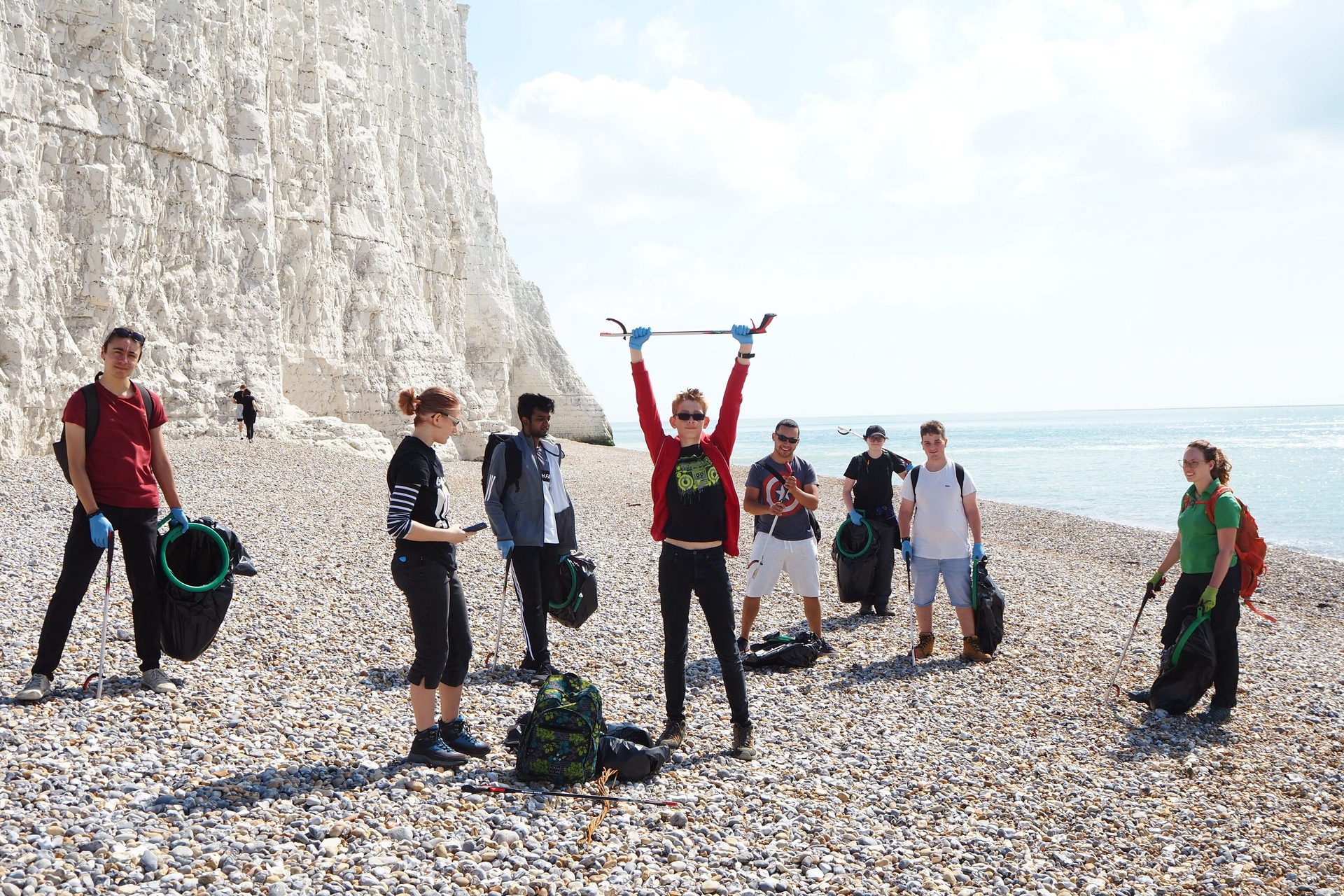
A close relationship with nature really matters to young people (under 25s). It affects how they feel and function, as well as their resilience to the challenges life can bring.
Yet, as young people’s concern for the natural world and our planet has grown, their access to it has not. Young people are being burdened with the worries for the future of nature and our planet without having the access or opportunities to do something about it. While we will continue to work with people of all ages, this aim seeks to address this issue and to create the opportunities young people need to become the future custodians of the National Park.
© SDNPA

Read more
For some young people the disconnect is even greater. In England:
- 18 per cent of young people living in the most deprived areas never visit the natural environment; and
- ethnically diverse children are four times as likely to have no access to outdoor space.
The Government’s new National Youth Strategy is looking to address the challenges facing young people today and will develop a youth-led approach to supporting young people and youth policymaking. Engaging young people in decision making about the future of the South Downs National Park is key. The input of youth voices into the development of this Partnership Plan has been crucial to ensuring that its priorities deliver for the needs of young people and support their role as future custodians. Fostering longer term relationships with nature instils a sense of responsibility towards the environment and encourages long-term outdoor engagement.
Read more
For some young people the disconnect is even greater. In England:
- 18 per cent of young people living in the most deprived areas never visit the natural environment; and
- ethnically diverse children are four times as likely to have no access to outdoor space.
The Government’s new National Youth Strategy is looking to address the challenges facing young people today and will develop a youth-led approach to supporting young people and youth policymaking. Engaging young people in decision making about the future of the South Downs National Park is key. The input of youth voices into the development of this Partnership Plan has been crucial to ensuring that its priorities deliver for the needs of young people and support their role as future custodians. Fostering longer term relationships with nature instils a sense of responsibility towards the environment and encourages long-term outdoor engagement.

Read more
For some young people the disconnect is even greater. In England:
- 18 per cent of young people living in the most deprived areas never visit the natural environment; and
- ethnically diverse children are four times as likely to have no access to outdoor space.
The Government’s new National Youth Strategy is looking to address the challenges facing young people today and will develop a youth-led approach to supporting young people and youth policymaking. Engaging young people in decision making about the future of the South Downs National Park is key. The input of youth voices into the development of this Partnership Plan has been crucial to ensuring that its priorities deliver for the needs of young people and support their role as future custodians. Fostering longer term relationships with nature instils a sense of responsibility towards the environment and encourages long-term outdoor engagement.
Opportunities the National Park offers
The South Downs offers fantastic opportunities for young people to be in nature, to learn outside, enhance their health and wellbeing, experience heritage, have fun, build a future career, and take positive action to enhance the National Park now and in the future. Whether it be a school trip, a university project, a Youth Action practical conservation day or a heritage skills taster day, it’s these memorable experiences that can inspire a lifetime of caring for the environment.
There are 893 schools supporting 500,000 young people in and around the South Downs and 69 per cent of them visit the National Park each year, with three Ambassador Schools offering peer-to-peer support, inspiration and host visits for schools, colleges and other learning providers. We are lucky to have a significant number of universities and further education establishments in and around the National Park. This creates an opportunity for young people to take an active role in the National Park through research, projects, volunteering and other activities, as well as providing space to support their health and wellbeing.
National Parks were designated for the nation, and we want young people from the wider south east and London to be able to experience time outdoors in the South Downs and all the benefits that brings. Such experiences can be life-changing.
In 2024, the Explorers of the South Downs programme enabled 1,430 young people from 40 school groups from disadvantaged areas to explore the nature, history and culture of the National Park. Over 40 per cent of pupils were accessing Free School Meals, 23 per cent had special needs, and, in one school alone, over 50 per cent identified as from ethnically diverse communities.
In another example, young people from across the south east attended residential summer camps to develop a deeper connection to nature, experience hands-on work to take practical action for the natural world, grow their leadership skills, and build strong, nurturing relationships with a network of peers who share their values:
“I hope that everyone gets this opportunity once in their lives. It is quite amazing and life-changing. It makes you open your mind and open your eyes to see the world in different ways.” Anali, aged 14 from Essex.
We want to create more opportunities for more young people like Anali to engage with nature, climate and heritage; and to be able to access the training and skills needed to access green careers.
Opportunities the National Park offers
The South Downs offers fantastic opportunities for young people to be in nature, to learn outside, enhance their health and wellbeing, experience heritage, have fun, build a future career, and take positive action to enhance the National Park now and in the future. Whether it be a school trip, a university project, a Youth Action practical conservation day or a heritage skills taster day, it’s these memorable experiences that can inspire a lifetime of caring for the environment.
There are 893 schools supporting 500,000 young people in and around the South Downs and 69 per cent of them visit the National Park each year, with three Ambassador Schools offering peer-to-peer support, inspiration and host visits for schools, colleges and other learning providers. We are lucky to have a significant number of universities and further education establishments in and around the National Park. This creates an opportunity for young people to take an active role in the National Park through research, projects, volunteering and other activities, as well as providing space to support their health and wellbeing.
National Parks were designated for the nation, and we want young people from the wider south east and London to be able to experience time outdoors in the South Downs and all the benefits that brings. Such experiences can be life-changing.
In 2024, the Explorers of the South Downs programme enabled 1,430 young people from 40 school groups from disadvantaged areas to explore the nature, history and culture of the National Park. Over 40 per cent of pupils were accessing Free School Meals, 23 per cent had special needs, and, in one school alone, over 50 per cent identified as from ethnically diverse communities.
In another example, young people from across the south east attended residential summer camps to develop a deeper connection to nature, experience hands-on work to take practical action for the natural world, grow their leadership skills, and build strong, nurturing relationships with a network of peers who share their values.
The camps were run by Action for Conservation and funded by the South Downs National Park Trust. 39% of the young people were from ethnically diverse communities, 11% had special educational needs and disabilities, and 21% were from lower socio-economic backgrounds. 100% of young people took part in nature restoration activities.
We want to create more opportunities for more young people like Anali (see quote below) to engage with nature, climate and heritage; and to be able to access the training and skills needed to access green careers.
Opportunities the National Park offers
The South Downs offers fantastic opportunities for young people to be in nature, to learn outside, enhance their health and wellbeing, experience heritage, have fun, build a future career, and take positive action to enhance the National Park now and in the future. Whether it be a school trip, a university project, a Youth Action practical conservation day or a heritage skills taster day, it’s these memorable experiences that can inspire a lifetime of caring for the environment.
There are 893 schools supporting 500,000 young people in and around the South Downs and 69 per cent of them visit the National Park each year, with three Ambassador Schools offering peer-to-peer support, inspiration and host visits for schools, colleges and other learning providers. We are lucky to have a significant number of universities and further education establishments in and around the National Park. This creates an opportunity for young people to take an active role in the National Park through research, projects, volunteering and other activities, as well as providing space to support their health and wellbeing.
National Parks were designated for the nation, and we want young people from the wider south east and London to be able to experience time outdoors in the South Downs and all the benefits that brings. Such experiences can be life-changing.
In 2024, the Explorers of the South Downs programme enabled 1,430 young people from 40 school groups from disadvantaged areas to explore the nature, history and culture of the National Park. Over 40 per cent of pupils were accessing Free School Meals, 23 per cent had special needs, and, in one school alone, over 50 per cent identified as from ethnically diverse communities.
In another example, young people from across the south east attended residential summer camps to develop a deeper connection to nature, experience hands-on work to take practical action for the natural world, grow their leadership skills, and build strong, nurturing relationships with a network of peers who share their values:
We want to create more opportunities for more young people like Anali to engage with nature, climate and heritage; and to be able to access the training and skills needed to access green careers.
I hope that everyone gets this opportunity once in their lives. It is quite amazing and life-changing. It makes you open your mind and open your eyes to see the world in different ways.
Anali, aged 14 from Essex.

Objective 4.1
To provide opportunities for young people to take positive action for nature, climate and cultural heritage.
Young people are the future custodians of the South Downs and have a positive role to play in helping to shape its future. Positive relationships with universities and further education providers is vital to provide opportunities to develop the understanding, knowledge and skills needed in our future custodians.
Targets for Objective 4.1
Target 4.1a: (PLTOF Access for All metrics) 2,500 schools engaged (primary and secondary) both inside and outside the National Park boundary per year.
Target 4.1b: Work in partnership to deliver 500 youth activity sessions, so that young people will have opportunities to take positive action for nature, climate and heritage in the National Park by 2031.
Read more about Objective 4.1
We are committed to providing more opportunities to enable young people from all backgrounds to experience nature first-hand, benefit from the multiple benefits it brings and to give something back to nature, climate and people. Working in partnership with young people themselves, youth organisations and sector specialists will enable us to grow the opportunities for young people to take positive action, and the number and diversity of young people who are able to access these opportunities.
The nature and climate crises pose a significant threat, not only to the environment but to young people’s mental well-being. Eco-anxiety amongst young people is on the rise and having opportunities to take positive action is important in supporting young people to feel that they can be part of the solution.
Natural England’s Children’s People and Nature Survey (2024), showed that 83 per cent of children and young people surveyed agreed that looking after the environment was important to them. Many reported already doing a range of things to look after the environment. Most children and young people said that they would like to do more as their actions can help save wildlife and support good health. It also makes being in nature a better experience for them.
A lack of access to the skills, knowledge or confidence to understand the natural environment is a barrier to young people taking action.
Read more about Objective 4.1
We are committed to providing more opportunities to enable young people from all backgrounds to experience nature first-hand, benefit from the multiple benefits it brings and to give something back to nature, climate and people. Working in partnership with young people themselves, youth organisations and sector specialists will enable us to grow the opportunities for young people to take positive action, and the number and diversity of young people who are able to access these opportunities.
The nature and climate crises pose a significant threat, not only to the environment but to young people’s mental well-being. Eco-anxiety amongst young people is on the rise and having opportunities to take positive action is important in supporting young people to feel that they can be part of the solution.
Natural England’s Children’s People and Nature Survey (2024), showed that 83 per cent of children and young people surveyed agreed that looking after the environment was important to them. Many reported already doing a range of things to look after the environment. Most children and young people said that they would like to do more as their actions can help save wildlife and support good health. It also makes being in nature a better experience for them.
A lack of access to the skills, knowledge or confidence to understand the natural environment is a barrier to young people taking action.
Read more about Objective 4.1
We are committed to providing more opportunities to enable young people from all backgrounds to experience nature first-hand, benefit from the multiple benefits it brings and to give something back to nature, climate and people. Working in partnership with young people themselves, youth organisations and sector specialists will enable us to grow the opportunities for young people to take positive action, and the number and diversity of young people who are able to access these opportunities.
The nature and climate crises pose a significant threat, not only to the environment but to young people’s mental well-being. Eco-anxiety amongst young people is on the rise and having opportunities to take positive action is important in supporting young people to feel that they can be part of the solution.
Natural England’s Children’s People and Nature Survey (2024), showed that 83 per cent of children and young people surveyed agreed that looking after the environment was important to them. Many reported already doing a range of things to look after the environment. Most children and young people said that they would like to do more as their actions can help save wildlife and support good health. It also makes being in nature a better experience for them.
A lack of access to the skills, knowledge or confidence to understand the natural environment is a barrier to young people taking action.
Objective 4.2
To support young people on the pathway to green careers.
We need to work together to develop clear pathways into green and heritage careers for young people from all backgrounds, whether that be as rangers and conservationists or skilled traditional craftspeople. This includes more opportunities for training and skills development, an increase in work-related learning opportunities including paid internships and apprenticeships, and greater awareness of the diverse range of viable green career opportunities.
Targets for Objective 4.2
Target 4.2a: By 2031, provide work-related learning, skills development, and experiential sessions to a minimum of 2,500 young people.
Read more about Objective 4.2
The Government Green Jobs Taskforce identifies Green Careers as a huge economic growth area with an ambition for 2 million green jobs and the need for at least 480,000 skilled green jobs by 2030. These “green skills” are also key to us meeting the needs of a low-carbon economy.
Green skills: refers to careers that have a positive impact on the environment or sustainability. This includes farming/food production, traditional heritage crafts, as well as technology/data driven and wider heritage skills.
However, there is a gap in green skills and traditional crafts across the National Park. Historic England analysis nationally has shown that more than 40 per cent of contractors working with traditional methods have trouble recruiting and the age profile of those working in the sector is increasing.
Our built heritage and our distinctive towns and villages form the basis of two of our seven special qualities. Traditional crafts and skills are essential to maintaining the character and unique feel of the National Park. Reaching net zero while protecting heritage across the National Park also means that we need the skills to sensitively adapt historic buildings through green energy and carbon reduction improvements.
The Heritage Crafts' Red List of Endangered Crafts identifies 23 of 40 building conservation crafts as endangered, critically endangered, or extinct, including skills like brickmaking and hurdle making. As the number of skilled craftspeople declines, we risk not being able to pass these skills on to the next generation. This means fewer career options for young people in caring for the National Park, and risks not being able to maintain the heritage and character of the National Park and ensure its buildings and communities are adapted for the future.
It can be very difficult for young people to find ways into learning and careers in environmental work and traditional skills. Green careers are not universally understood and are not seen as a viable career choice by many young people.
“I have really enjoyed seeing students get hands on with the activities, which they wouldn’t usually get to do. It has been fantastic to see what heritage crafts actually are and how important it is to keep these trades alive.” Youseff Wilson, Learning Support, Chichester College commenting after a Heritage Taster Day.
Over half of all participants surveyed in the New to Nature programme believe that careers in the environmental sector are not accessible to people from ethnically diverse backgrounds and/or working-class backgrounds, and two thirds perceive the sector as inaccessible for individuals with disabilities and long-term health conditions. Reported barriers included a lack of experience, lack of entry level jobs, requirement for volunteering/other unpaid experience that precludes those on low incomes, and the need for formal qualifications.
Read more about Objective 4.2
The Government Green Jobs Taskforce identifies Green Careers as a huge economic growth area with an ambition for 2 million green jobs and the need for at least 480,000 skilled green jobs by 2030. These “green skills” are also key to us meeting the needs of a low-carbon economy.
Green skills: refers to careers that have a positive impact on the environment or sustainability. This includes farming/food production, traditional heritage crafts, as well as technology/data driven and wider heritage skills.
However, there is a gap in green skills and traditional crafts across the National Park. Historic England analysis nationally has shown that more than 40 per cent of contractors working with traditional methods have trouble recruiting and the age profile of those working in the sector is increasing.
Our built heritage and our distinctive towns and villages form the basis of two of our seven special qualities. Traditional crafts and skills are essential to maintaining the character and unique feel of the National Park. Reaching net zero while protecting heritage across the National Park also means that we need the skills to sensitively adapt historic buildings through green energy and carbon reduction improvements.
The Heritage Crafts' Red List of Endangered Crafts identifies 23 of 40 building conservation crafts as endangered, critically endangered, or extinct, including skills like brickmaking and hurdle making. As the number of skilled craftspeople declines, we risk not being able to pass these skills on to the next generation. This means fewer career options for young people in caring for the National Park, and risks not being able to maintain the heritage and character of the National Park and ensure its buildings and communities are adapted for the future.
It can be very difficult for young people to find ways into learning and careers in environmental work and traditional skills. Green careers are not universally understood and are not seen as a viable career choice by many young people.
“I have really enjoyed seeing students get hands on with the activities, which they wouldn’t usually get to do. It has been fantastic to see what heritage crafts actually are and how important it is to keep these trades alive.” Youseff Wilson, Learning Support, Chichester College commenting after a Heritage Taster Day.
Over half of all participants surveyed in the New to Nature programme believe that careers in the environmental sector are not accessible to people from ethnically diverse backgrounds and/or working-class backgrounds, and two thirds perceive the sector as inaccessible for individuals with disabilities and long-term health conditions. Reported barriers included a lack of experience, lack of entry level jobs, requirement for volunteering/other unpaid experience that precludes those on low incomes, and the need for formal qualifications.
Read more about Objective 4.2
The Government Green Jobs Taskforce identifies Green Careers as a huge economic growth area with an ambition for 2 million green jobs and the need for at least 480,000 skilled green jobs by 2030. These “green skills” are also key to us meeting the needs of a low-carbon economy.
Green skills: refers to careers that have a positive impact on the environment or sustainability. This includes farming/food production, traditional heritage crafts, as well as technology/data driven and wider heritage skills.
However, there is a gap in green skills and traditional crafts across the National Park. Historic England analysis nationally has shown that more than 40 per cent of contractors working with traditional methods have trouble recruiting and the age profile of those working in the sector is increasing.
Our built heritage and our distinctive towns and villages form the basis of two of our seven special qualities. Traditional crafts and skills are essential to maintaining the character and unique feel of the National Park. Reaching net zero while protecting heritage across the National Park also means that we need the skills to sensitively adapt historic buildings through green energy and carbon reduction improvements.
The Heritage Crafts' Red List of Endangered Crafts identifies 23 of 40 building conservation crafts as endangered, critically endangered, or extinct, including skills like brickmaking and hurdle making. As the number of skilled craftspeople declines, we risk not being able to pass these skills on to the next generation. This means fewer career options for young people in caring for the National Park, and risks not being able to maintain the heritage and character of the National Park and ensure its buildings and communities are adapted for the future.
It can be very difficult for young people to find ways into learning and careers in environmental work and traditional skills. Green careers are not universally understood and are not seen as a viable career choice by many young people.
“I have really enjoyed seeing students get hands on with the activities, which they wouldn’t usually get to do. It has been fantastic to see what heritage crafts actually are and how important it is to keep these trades alive.” Youseff Wilson, Learning Support, Chichester College commenting after a Heritage Taster Day.
Over half of all participants surveyed in the New to Nature programme believe that careers in the environmental sector are not accessible to people from ethnically diverse backgrounds and/or working-class backgrounds, and two thirds perceive the sector as inaccessible for individuals with disabilities and long-term health conditions. Reported barriers included a lack of experience, lack of entry level jobs, requirement for volunteering/other unpaid experience that precludes those on low incomes, and the need for formal qualifications.