

Aim 6
Cultural Heritage

Aim 6
Cultural Heritage
Aim 6:
Cultural Heritage
Cultural heritage in the South Downs National Park is conserved, enjoyed, valued, created and passed on for future generations.
Click the buzzard to hear their call.

Tap the buzzard to hear their call.
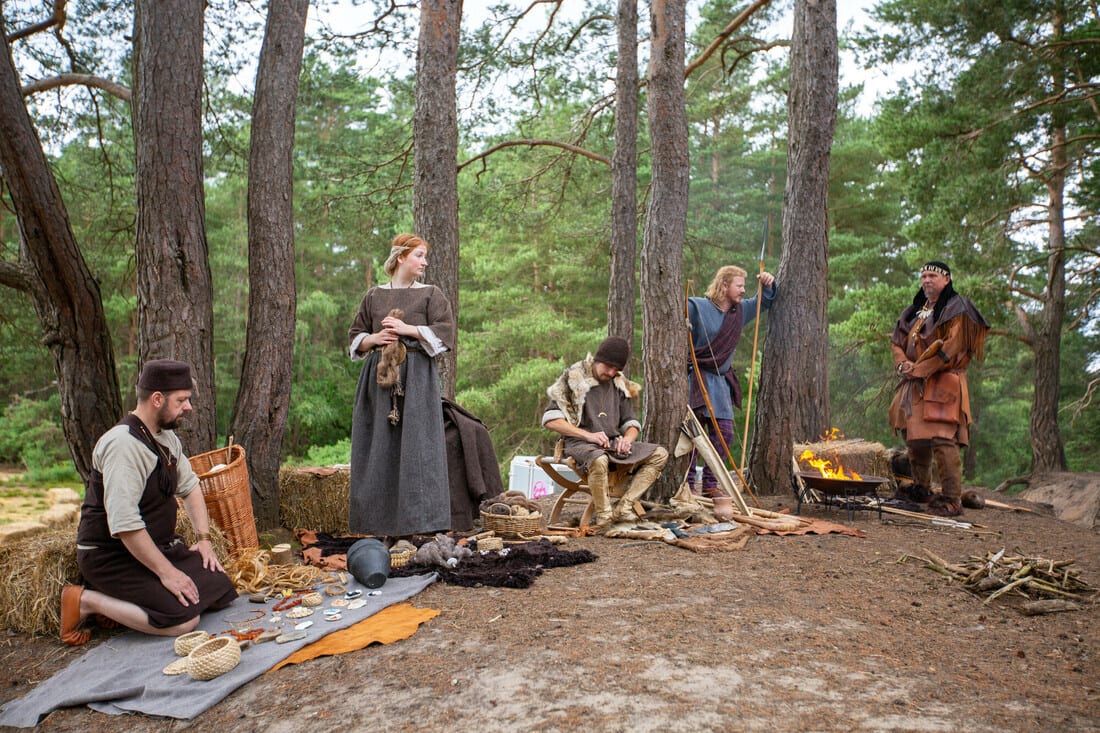
The South Downs is a landscape rich in history and culture shaped by many different people over time. Each has left a mark on the landscape and shaped what we see and cherish today.
This landscape also continues to inspire and be shaped by and shape the people who live and visit here. Each generation to come will do the same – leave a footprint, define an experience, create a legacy and inspire those who live and visit here.
Our cultural heritage underpins the heart of the South Downs and its unique sense of place. It also has a real financial value through tourism and through its contribution to the health and wellbeing of those who engage with it/enjoy it.
© Andy Reeves
Why is cultural heritage so vital?
[Add cultural heritage graphic here]
A number of the South Down’s heritage assets can be linked to nature recovery. Over 160 or 28 per cent of the Scheduled Monuments in the National Park are located on Sites of Special Scientific Interest (SSSIs), with their condition used as an indicator of overall SSSI health. Heritage protections can deliver positive outcomes for nature, for example, the recognition that archaeological earthworks such as Iron Age hillforts provide unique habitats, as their heritage status limits intensive activities, and their form and structure providing sheltered conditions via banks and ditches. As is captured in the first purpose of National Parks, the conservation of the natural and the heritage landscape often go hand in hand.
Although Heritage at Risk in the South Downs is very low, around 41 per cent of Scheduled Monuments in the National Park were considered to be vulnerable and/or in declining condition at the date of their last site assessment. Just like natural habitats, they are vulnerable to a range of factors, such as intensive land use, lack of management, climate change, etc, and even a lack of knowledge or awareness can lead to decisions that unwittingly impact their conservation. They can also be impacted by irresponsible behaviour such as digging, fires and unlawful metal detecting. Together we need to improve the quality and frequency of data we capture on condition, and to build better understanding and care for these priceless and unique assets.
Advances in technology provide real opportunities to monitor and preserve our heritage assets. In recent years, for example, the use of LIDAR technology enabled the identification of heritage assets long since buried under woodland. Partnerships with academics and organisations leading the way with new technologies are vital to help us better understand, protect and share the secrets of our heritage assets to inspire new generations. Such advances also provide opportunities for citizen scientists to become actively involved in their preservation. While some heritage assets are protected by law, many others are not, and we must work together to ensure that these physical stories of our past can remain part of our rich future.
© Sam Moore
Why is cultural heritage so vital?
A number of the South Down’s heritage assets can be linked to nature recovery. Over 160 or 28 per cent of the Scheduled Monuments in the National Park are located on Sites of Special Scientific Interest (SSSIs), with their condition used as an indicator of overall SSSI health. Heritage protections can deliver positive outcomes for nature, for example, the recognition that archaeological earthworks such as Iron Age hillforts provide unique habitats, as their heritage status limits intensive activities, and their form and structure providing sheltered conditions via banks and ditches. As is captured in the first purpose of National Parks, the conservation of the natural and the heritage landscape often go hand in hand.
Although Heritage at Risk in the South Downs is very low, around 41 per cent of Scheduled Monuments in the National Park were considered to be vulnerable and/or in declining condition at the date of their last site assessment. Just like natural habitats, they are vulnerable to a range of factors, such as intensive land use, lack of management, climate change, etc, and even a lack of knowledge or awareness can lead to decisions that unwittingly impact their conservation. They can also be impacted by irresponsible behaviour such as digging, fires and unlawful metal detecting. Together we need to improve the quality and frequency of data we capture on condition, and to build better understanding and care for these priceless and unique assets.
Advances in technology provide real opportunities to monitor and preserve our heritage assets. In recent years, for example, the use of LIDAR technology enabled the identification of heritage assets long since buried under woodland. Partnerships with academics and organisations leading the way with new technologies are vital to help us better understand, protect and share the secrets of our heritage assets to inspire new generations. Such advances also provide opportunities for citizen scientists to become actively involved in their preservation. While some heritage assets are protected by law, many others are not, and we must work together to ensure that these physical stories of our past can remain part of our rich future.

Cultural Heritage of the South Downs National Park
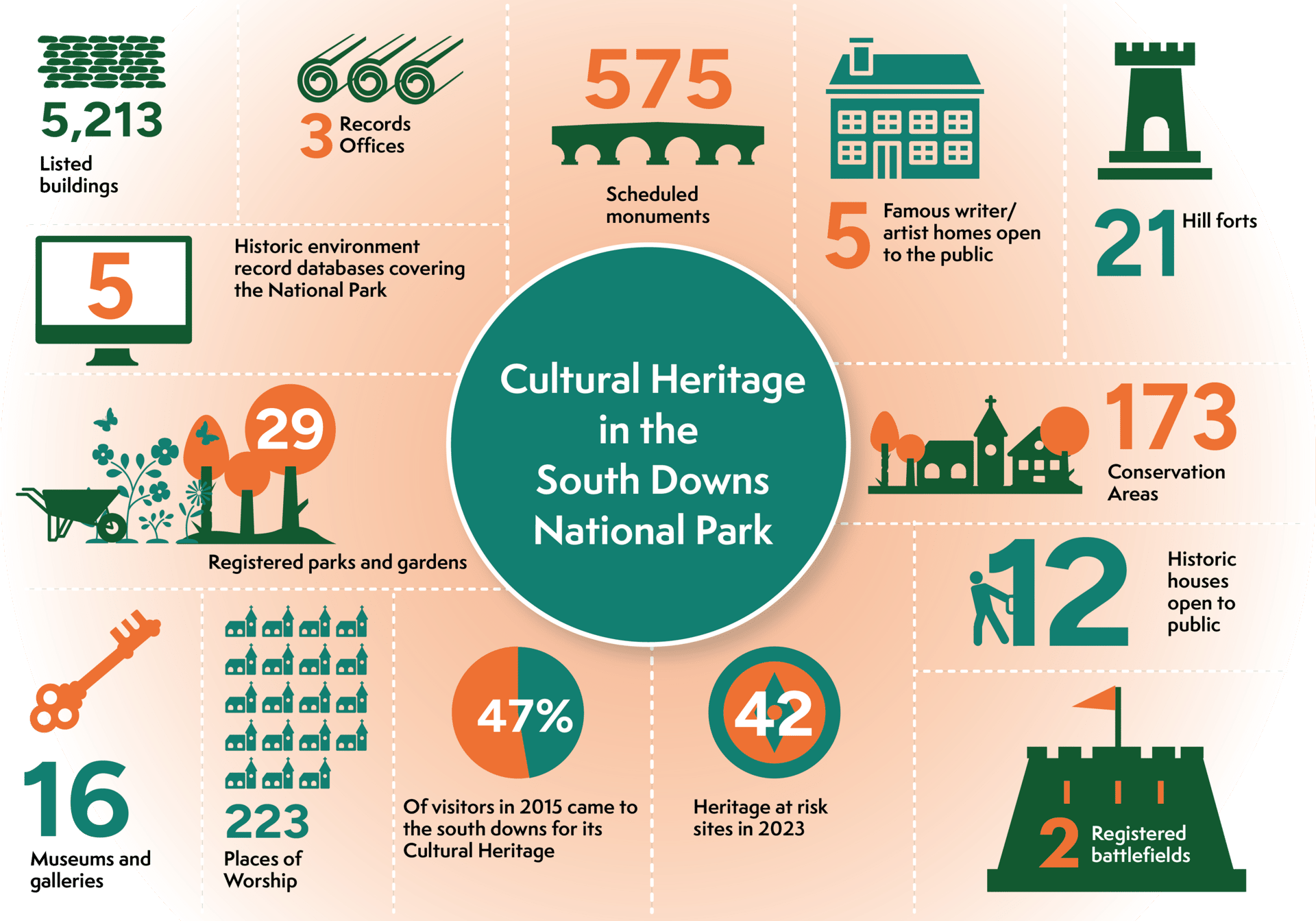
Why is cultural heritage so vital?
A number of the South Down’s heritage assets can be linked to nature recovery. Over 160 or 28 per cent of the Scheduled Monuments in the National Park are located on Sites of Special Scientific Interest (SSSIs), with their condition used as an indicator of overall SSSI health. Heritage protections can deliver positive outcomes for nature, for example, the recognition that archaeological earthworks such as Iron Age hillforts provide unique habitats, as their heritage status limits intensive activities, and their form and structure providing sheltered conditions via banks and ditches. As is captured in the first purpose of National Parks, the conservation of the natural and the heritage landscape often go hand in hand.
Although Heritage at Risk in the South Downs is very low, around 41 per cent of Scheduled Monuments in the National Park were considered to be vulnerable and/or in declining condition at the date of their last site assessment. Just like natural habitats, they are vulnerable to a range of factors, such as intensive land use, lack of management, climate change, etc, and even a lack of knowledge or awareness can lead to decisions that unwittingly impact their conservation. They can also be impacted by irresponsible behaviour such as digging, fires and unlawful metal detecting. Together we need to improve the quality and frequency of data we capture on condition, and to build better understanding and care for these priceless and unique assets.
Advances in technology provide real opportunities to monitor and preserve our heritage assets. In recent years, for example, the use of LIDAR technology enabled the identification of heritage assets long since buried under woodland. Partnerships with academics and organisations leading the way with new technologies are vital to help us better understand, protect and share the secrets of our heritage assets to inspire new generations. Such advances also provide opportunities for citizen scientists to become actively involved in their preservation. While some heritage assets are protected by law, many others are not, and we must work together to ensure that these physical stories of our past can remain part of our rich future.
Financial value of culture and heritage
Read more
[Add Financial value of culture and heritage graphic here]
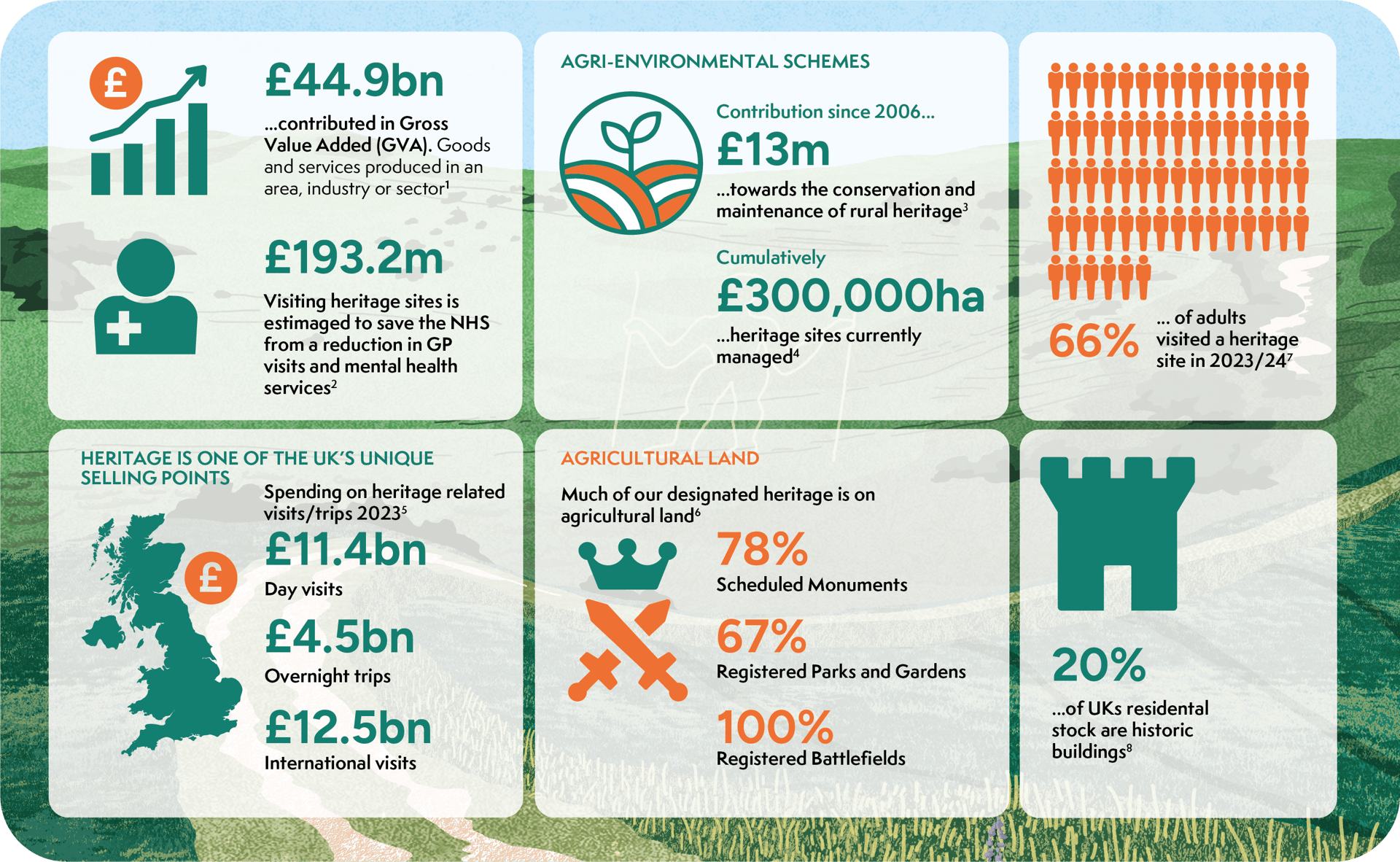
Engaging with culture and heritage improves the health and wellbeing of UK adults by £8 billion every year via societal benefits, healthcare savings and productivity increases. This compliments and supports the role of National Parks as a ‘Natural Health Service’ for the nation.
The South Downs’ cultural heritage will continue to grow and change over time and, while there are significant challenges – from failing infrastructure and a lack of funding and resources across cultural and heritage organisations, to nature loss and climate change – there are also opportunities. Our shared heritage tells us about past land use and can help us to make decisions for the future, and how we can work with this landscape to adapt and thrive in changing times.
With a changing climate, and changing community needs, our heritage can be part of the conversations we have about everything from housing provision to energy independence. The ability to adapt older buildings to accommodate green energy solutions to reduce carbon impacts and reduce energy costs for residents makes the need for retrofit and the associated skills to adapt older buildings essential for the future.
Our cultural heritage is also how we as individuals and communities connect with place and often experience sense of place. The stories we tell about the South Downs landscape are unique to this place and our interaction with it over time, from our buildings to our folklore, to the stories being crafted by new voices experiencing the National Park for the first time. We must not only protect the past but provide opportunities to create the cultural heritage of the future through creative arts developed with and by communities; through sensitive design; and through new stories of our landscape, told by voices both familiar and new.
Read more
Engaging with culture and heritage improves the health and wellbeing of UK adults by £8 billion every year via societal benefits, healthcare savings and productivity increases. This compliments and supports the role of National Parks as a ‘Natural Health Service’ for the nation.
The South Downs’ cultural heritage will continue to grow and change over time and, while there are significant challenges – from failing infrastructure and a lack of funding and resources across cultural and heritage organisations, to nature loss and climate change – there are also opportunities. Our shared heritage tells us about past land use and can help us to make decisions for the future, and how we can work with this landscape to adapt and thrive in changing times.
With a changing climate, and changing community needs, our heritage can be part of the conversations we have about everything from housing provision to energy independence. The ability to adapt older buildings to accommodate green energy solutions to reduce carbon impacts and reduce energy costs for residents makes the need for retrofit and the associated skills to adapt older buildings essential for the future.
Our cultural heritage is also how we as individuals and communities connect with place and often experience sense of place. The stories we tell about the South Downs landscape are unique to this place and our interaction with it over time, from our buildings to our folklore, to the stories being crafted by new voices experiencing the National Park for the first time. We must not only protect the past but provide opportunities to create the cultural heritage of the future through creative arts developed with and by communities; through sensitive design; and through new stories of our landscape, told by voices both familiar and new.
Read more
Engaging with culture and heritage improves the health and wellbeing of UK adults by £8 billion every year via societal benefits, healthcare savings and productivity increases. This compliments and supports the role of National Parks as a ‘Natural Health Service’ for the nation.
The South Downs’ cultural heritage will continue to grow and change over time and, while there are significant challenges – from failing infrastructure and a lack of funding and resources across cultural and heritage organisations, to nature loss and climate change – there are also opportunities. Our shared heritage tells us about past land use and can help us to make decisions for the future, and how we can work with this landscape to adapt and thrive in changing times.
With a changing climate, and changing community needs, our heritage can be part of the conversations we have about everything from housing provision to energy independence. The ability to adapt older buildings to accommodate green energy solutions to reduce carbon impacts and reduce energy costs for residents makes the need for retrofit and the associated skills to adapt older buildings essential for the future.
Our cultural heritage is also how we as individuals and communities connect with place and often experience sense of place. The stories we tell about the South Downs landscape are unique to this place and our interaction with it over time, from our buildings to our folklore, to the stories being crafted by new voices experiencing the National Park for the first time. We must not only protect the past but provide opportunities to create the cultural heritage of the future through creative arts developed with and by communities; through sensitive design; and through new stories of our landscape, told by voices both familiar and new.
Objective 6.1
Increase conservation, awareness, access and understanding of cultural heritage in the National Park.
We must continue to come together to ensure our wonderful historic places are in a good condition and are better understood, so that they can be enjoyed by future generations. This includes looking at the sensitive retrofitting and adaptation of our historic buildings. We must also continue to learn from the past so that we can use that knowledge to adapt to the challenges facing our landscape now and in the future. And we must recognise the benefits that heritage can deliver for nature.
Targets for Objective 6.1
Target 6.1a: PLTOF Target 10: Decrease the number of nationally designated heritage assets at risk in Protected Landscapes.
Target 6.2b: 200 scheduled Monuments to have enhanced or updated condition records on the National Heritage List for England (NHLE) by 2031.
Target 6.1c: By 2031, to have increased the number of heritage assets covered by agri-environment schemes.
Read more
Together we will work to support partnerships and initiatives that advance our knowledge of the landscape, and that connect people to the landscape, support nature recovery and inform climate adaptation.
There have been signs left for us about how people in the past managed the land – from Prehistoric and Roman field systems to holloways and pollen samples encased in the soils beneath our feet. Stories from the past are being uncovered all the time and these can help us plan our future. This knowledge may help us to adapt to changes happening now, while heritage protections of some of these key sites can also provide a safe haven for nature. So, heritage also helps us plan for the future and has a key role to play in supporting nature recovery today.
However, our historic places are facing many threats. A lack of funding and resources, lack of traditional skills continuing, development pressures, changes in land management and funding schemes, nature depletion and climate change, among others, is limiting capacity and increasing threats to those places.
Read more about Objective 6.1
Together we will work to support partnerships and initiatives that advance our knowledge of the landscape, and that connect people to the landscape, support nature recovery and inform climate adaptation.
There have been signs left for us about how people in the past managed the land – from Prehistoric and Roman field systems to holloways and pollen samples encased in the soils beneath our feet. Stories from the past are being uncovered all the time and these can help us plan our future. This knowledge may help us to adapt to changes happening now, while heritage protections of some of these key sites can also provide a safe haven for nature. So, heritage also helps us plan for the future and has a key role to play in supporting nature recovery today.
However, our historic places are facing many threats. A lack of funding and resources, lack of traditional skills continuing, development pressures, changes in land management and funding schemes, nature depletion and climate change, among others, is limiting capacity and increasing threats to those places.
Read more about Objective 6.1
Together we will work to support partnerships and initiatives that advance our knowledge of the landscape, and that connect people to the landscape, support nature recovery and inform climate adaptation.
There have been signs left for us about how people in the past managed the land – from Prehistoric and Roman field systems to holloways and pollen samples encased in the soils beneath our feet. Stories from the past are being uncovered all the time and these can help us plan our future. This knowledge may help us to adapt to changes happening now, while heritage protections of some of these key sites can also provide a safe haven for nature. So, heritage also helps us plan for the future and has a key role to play in supporting nature recovery today.
However, our historic places are facing many threats. A lack of funding and resources, lack of traditional skills continuing, development pressures, changes in land management and funding schemes, nature depletion and climate change, among others, is limiting capacity and increasing threats to those places.
Objective 6.2
Promote connection to the landscape and its special qualities through archaeology, traditional crafts, contemporary arts and diverse storytelling.
Heritage is, at its heart, the stories of our past. Telling stories was how we passed on our knowledge, our traditions and how we built communities. Today, it is a key way in which we understand and connect to the landscape around us.
Targets for Objective 6.2
Target 6.2a: 2000 people are engaged in nature and landscape through arts and heritage engagement activities by 2031.
Target 6.2b: by 2031, 100 new creative arts responses to the wildlife, heritage and landscape of the South Downs have been produced.
Read more about Objective 6.2
The shape of the land itself influences our stories and myths. Legend says that the distinctive ridges curling around Bignor Hill were cut by a giant worm wrapping his enormous tail around the hill. Meanwhile a fearsome dragon guards his marvellous hoard of gold and precious stones in an underground tunnel near Cissbury Ring. Our museums are full of objects found in the landscape that help us understand how people interacted with it, and our galleries full of work by artists who were inspired by the landscape.
In addition to supporting the traditional heritage crafts that have given our built heritage its uniqueness (see Objective 4.2), we want to support engagement through archaeology, museums, art and heritage. We want more people to discover, develop skills and enhance their wellbeing by connecting to this place. We want to use our past to inform a positive future.
We must look after our heritage and remember that it is being created all the time as the South Downs continues to inspire the creativity of our artists, writers and musicians. These are the cultural icons of the future, the contributors to our sense of place. The creative industries are a priority sector in the 2025 Industrial Strategy and the National Park provides real opportunities for creatives clusters that focus on nature, place and people.
We will do this by focusing on supporting projects co-developed with or led by communities who want to tell traditional stories in new ways or who want to tell stories yet untold about this landscape. Through advice, support and signposting, and, where appropriate, through fundraising, we want to further the potential for connection to nature and landscape through creativity and discovery. We also want to support collaboration between artists, archaeologists and museums, so we explore new ways of communicating old stories to new audiences.
Read more about Objective 6.2
The shape of the land itself influences our stories and myths. Legend says that the distinctive ridges curling around Bignor Hill were cut by a giant worm wrapping his enormous tail around the hill. Meanwhile a fearsome dragon guards his marvellous hoard of gold and precious stones in an underground tunnel near Cissbury Ring. Our museums are full of objects found in the landscape that help us understand how people interacted with it, and our galleries full of work by artists who were inspired by the landscape.
In addition to supporting the traditional heritage crafts that have given our built heritage its uniqueness (see Objective 4.2), we want to support engagement through archaeology, museums, art and heritage. We want more people to discover, develop skills and enhance their wellbeing by connecting to this place. We want to use our past to inform a positive future.
We must look after our heritage and remember that it is being created all the time as the South Downs continues to inspire the creativity of our artists, writers and musicians. These are the cultural icons of the future, the contributors to our sense of place. The creative industries are a priority sector in the 2025 Industrial Strategy and the National Park provides real opportunities for creatives clusters that focus on nature, place and people.
We will do this by focusing on supporting projects co-developed with or led by communities who want to tell traditional stories in new ways or who want to tell stories yet untold about this landscape. Through advice, support and signposting, and, where appropriate, through fundraising, we want to further the potential for connection to nature and landscape through creativity and discovery. We also want to support collaboration between artists, archaeologists and museums, so we explore new ways of communicating old stories to new audiences.
Read more about Objective 6.2
The shape of the land itself influences our stories and myths. Legend says that the distinctive ridges curling around Bignor Hill were cut by a giant worm wrapping his enormous tail around the hill. Meanwhile a fearsome dragon guards his marvellous hoard of gold and precious stones in an underground tunnel near Cissbury Ring. Our museums are full of objects found in the landscape that help us understand how people interacted with it, and our galleries full of work by artists who were inspired by the landscape.
In addition to supporting the traditional heritage crafts that have given our built heritage its uniqueness (see Objective 4.2), we want to support engagement through archaeology, museums, art and heritage. We want more people to discover, develop skills and enhance their wellbeing by connecting to this place. We want to use our past to inform a positive future.
We must look after our heritage and remember that it is being created all the time as the South Downs continues to inspire the creativity of our artists, writers and musicians. These are the cultural icons of the future, the contributors to our sense of place. The creative industries are a priority sector in the 2025 Industrial Strategy and the National Park provides real opportunities for creatives clusters that focus on nature, place and people.
We will do this by focusing on supporting projects co-developed with or led by communities who want to tell traditional stories in new ways or who want to tell stories yet untold about this landscape. Through advice, support and signposting, and, where appropriate, through fundraising, we want to further the potential for connection to nature and landscape through creativity and discovery. We also want to support collaboration between artists, archaeologists and museums, so we explore new ways of communicating old stories to new audiences.