
We will support development that is landscape-led, follows regenerative development and design principles and has an overall positive impact on natural beauty, landscape and townscape character, natural ecosystems and biodiversity.
Partnership Management Plan 2026-2031
How We Will Deliver
© Cathryn Mantovani
This Plan is ambitious. To deliver it will require collaboration and close working with many different partners of all sizes. Its delivery will be guided by a set of delivery principles and a live delivery plan that will grow and develop over the time of the plan as new opportunities arise. It can and will only be delivered through partnership – with the many custodians needed to care for this unique and precious place.
Principles for Delivery
The following principles should guide anyone hoping to deliver aspects of the South Downs National Park Partnership Management Plan (2026-31). They include principles that cover our land use planning functions as well as broader principles for delivery.
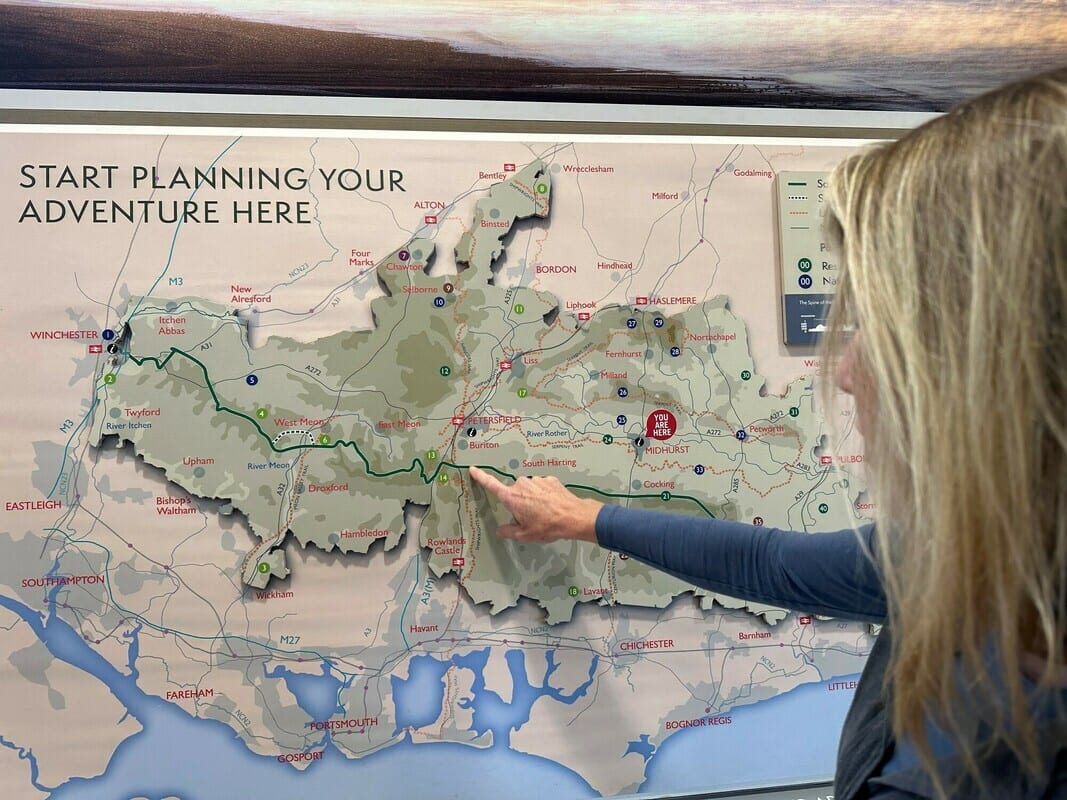
© Rebecca Saunders
Scroll down to read the principles
AIM 1: Nature Recovery
We will support development proposals that protect and take opportunities to enhance designated sites, protect ancient woodland and ancient and veteran trees, support protected species, follow the mitigation hierarchy and take opportunities to deliver bigger, better and more joined up nature.
In implementing biodiversity net gain, we will seek to ensure that enhancements to biodiversity are appropriate to their landscape, cultural and ecological context, and that any off-setting of negative impacts takes place within the National Park to ensure that it meets the Purpose 1 requirement to conserve and enhance the wildlife.
We will prioritise nature recovery that achieves multiple benefits and favour natural functions. We will create bigger, better managed and more connected areas of habitat in and around the National Park.
We will support farm businesses to access and
maintain agri-environment schemes that deliver ecosystem services on the ground, encouraging those that will support regenerative farming, and to access nature-based solutions schemes to deliver nature recovery and climate mitigation.
maintain agri-environment schemes that deliver ecosystem services on the ground, encouraging those that will support regenerative farming, and to access nature-based solutions schemes to deliver nature recovery and climate mitigation.
AIM 2: Climate Action
We will support proposals for smallscale renewable energy schemes that are appropriately located and designed, especially where such proposals are community-led and serve communities and businesses within the National Park.
We will support new development, and the retrofitting of existing development, that achieves net zero operational carbon, minimises embodied whole life carbon, utilises sustainable materials that support the circular economy, and is resilient to the impacts of climate change.
Farmers in the National Park have worked to deliver environmental improvements for decades. Funding is provided through agri-environments schemes, like Countryside Stewardship, Landscape Recovery and Sustainable Farm Incentive, and grant funding, from the National Lottery Heritage Fund to local grant giving trusts. Private finance also offers great potential to speed up and increase nature recovery, but it needs to be managed carefully to ensure that the right nature recovery happens in the right place, and that rigorous monitoring is in place. Farmers and other land managers are vital to nature recovery. In a landscape that is nearly 70 per cent farmed, we simply cannot do it without them.
Farmers in the National Park have worked to deliver environmental improvements for decades. Funding is provided through agri-environments schemes, like Countryside Stewardship, Landscape Recovery and Sustainable Farm Incentive, and grant funding, from the National Lottery Heritage Fund to local grant giving trusts. Private finance also offers great potential to speed up and increase nature recovery, but it needs to be managed carefully to ensure that the right nature recovery happens in the right place, and that rigorous monitoring is in place. Farmers and other land managers are vital to nature recovery. In a landscape that is nearly 70 per cent farmed, we simply cannot do it without them.
We will enhance the landscape, connect habitats, store carbon and improve our water environment by getting the right habitat in the right place with the right management.
We will support activities that give the public a chance to learn more about farming and the important benefits it provides – high-quality food, recreation, wellbeing, nature conservation, the historic environment, landscape and a thriving rural economy.
AIM 3: Clean Water
We will support a catchment-based approach to water and wastewater management that protects and enhances surface and groundwater quality, restores natural functions and processes, uses nature-based solutions to manage flood risk and improve water supply, and enhances public access to blue infrastructure.
We will support water efficiency measures and more sustainable patterns of water use and new water infrastructure to protect our water supply, aquifers, rivers and the habitats and species that depend on them.Farmers in the National Park have worked to deliver environmental improvements for decades. Funding is provided through agri-environments schemes, like Countryside Stewardship, Landscape Recovery and Sustainable Farm Incentive, and grant funding, from the National Lottery Heritage Fund to local grant giving trusts. Private finance also offers great potential to speed up and increase nature recovery, but it needs to be managed carefully to ensure that the right nature recovery happens in the right place, and that rigorous monitoring is in place. Farmers and other land managers are vital to nature recovery. In a landscape that is nearly 70 per cent farmed, we simply cannot do it without them.
We will protect the qualities and character of the Heritage Coast.
We will raise awareness of the importance of chalk streams and rivers and support their restoration and rehabilitation.
AIM 1: The South Downs National Park is a nature-rich, resilient working landscape where wildlife flourishes.
PLANNING PRINCIPLE 4:
We will support proposals for smallscale renewable energy schemes that are appropriately located and designed, especially where such proposals are community-led and serve communities and businesses within the National Park.
PLANNING PRINCIPLE 5:
We will support new development, and the retrofitting of existing development, that achieves net zero operational carbon, minimises embodied whole life carbon, utilises sustainable materials that support the circular economy, and is resilient to the impacts of climate change.
GENERAL PRINCIPLE 3:
We will enhance the landscape, connect habitats, store carbon and improve our water environment by getting the right habitat in the right place with the right management.
GENERAL PRINCIPLE 4:
We will support activities that give the public a chance to learn more about farming and the important benefits it provides – high-quality food, recreation, wellbeing, nature conservation, the historic environment, landscape and a thriving rural economy.
AIM 4: Young People
We will support the provision of necessary facilities and infrastructure that enable the delivery of training and education, especially for young people.
AIM 5: Welcome & Access
We will support development that improves the accessibility of the National Park, reduces car travel and facilitates sustainable modes of transport including active travel through better and new public rights of way and access land, safe and attractive pedestrian, equestrian and cycle routes and improved public transport.
We will protect and enhance the tranquility and dark skies of the National Park by supporting development that avoids unnecessary light pollution and utilises good design to mitigate the impact of any lighting and glazing, conserves relative tranquility and safeguardskey views.
We will promote and encourage the responsible use of the National Park to enhance the health and wellbeing of residents and visitors.
AIM 3: Clean, abundant water supports nature and communities in the South Downs National Park and beyond.
PLANNING PRINCIPLE 6:
We will support a catchment-based approach to water and wastewater management that protects and enhances surface and groundwater quality, restores natural functions and processes, uses nature-based solutions to manage flood risk and improve water supply, and enhances public access to blue infrastructure.
PLANNING PRINCIPLE 7:
We will support water efficiency measures and more sustainable patterns of water use and new water infrastructure to protect our water supply, aquifers, rivers and the habitats and species that depend on them.
GENERAL PRINCIPLE 5:
We will protect the qualities and character of the Heritage Coast.
GENERAL PRINCIPLE 6:
We will raise awareness of the importance of chalk streams and rivers and support their restoration and rehabilitation.
AIM 6: Cultural Heritage
We will support development that recognises the significance of the cultural heritage of the National Park, conserves and enhances heritage assets, encourages their optimum viable use and improves their ongoing management, especially where they are ‘at risk’.
We will support the conservation and enhancement of the historic and cultural environment of the National Park and its adaptation to climate change through best practice guidance, promoting an uptake in green skills and traditional heritage crafts, and the use of suitable sustainable materials.
AIM 4: Young people will have opportunities to access training and skills to enable them to take action to care for and enhance the South Downs National Park
PLANNING PRINCIPLE 8:
We will support the provision of necessary facilities and infrastructure that enable the delivery of training and education, especially for young people.
AIM 7: A Thriving, Greener Place
We will support new homes that increase the stock of smaller dwellings, support essential local workers, improve
people’s health and opportunities, are accessible and adaptable, and meet the diverse needs of our communities throughout all life stages.
people’s health and opportunities, are accessible and adaptable, and meet the diverse needs of our communities throughout all life stages.
We will support development that provides
visitor experiences and access that benefit our communities inside and outside the National Park, and enhances the landscape, encourages the use of the National Park as a place for healthy outdoor activity and relaxation and supports a regenerative visitor economy.
visitor experiences and access that benefit our communities inside and outside the National Park, and enhances the landscape, encourages the use of the National Park as a place for healthy outdoor activity and relaxation and supports a regenerative visitor economy.
We will support development that enhances
the role of towns and villages as social and economic hubs, and improves access to essential community services, infrastructure, including digital and EV infrastructure, and facilities, especially where this is community-led.
the role of towns and villages as social and economic hubs, and improves access to essential community services, infrastructure, including digital and EV infrastructure, and facilities, especially where this is community-led.
We will support development that provides
genuinely affordable housing, particularly social rented housing, that meets the needs of local communities in perpetuity and explore innovative ways of increasing delivery including through community-led development, exception sites and Whole Estate Plans.
genuinely affordable housing, particularly social rented housing, that meets the needs of local communities in perpetuity and explore innovative ways of increasing delivery including through community-led development, exception sites and Whole Estate Plans.
We will support new homes that increase the stock of smaller dwellings, support essential local workers, improve people’s health and opportunities, are accessible and adaptable, and meet the diverse needs of our communities throughout all life stages.
AIM 5: A valued South Downs National Park is welcoming and accessible to all.
PLANNING PRINCIPLE 9:
We will support development that improves the accessibility of the National Park, reduces car travel and facilitates sustainable modes of transport including active travel through better and new public rights of way and access land, safe and attractive pedestrian, equestrian and cycle routes and improved public transport.
PLANNING PRINCIPLE 10:
We will protect and enhance the tranquility and dark skies of the National Park by supporting development that avoids unnecessary light pollution and utilises good design to mitigate the impact of any lighting and glazing, conserves relative tranquility and safeguardskey views.
GENERAL PRINCIPLE 7:
We will promote and encourage the responsible use of the National Park to enhance the health and wellbeing of residents and visitors.
AIM 6: Cultural Heritage is conserved, understood, valued, created and passed on for future generations.
PLANNING PRINCIPLE 11:
We will support development that recognises the significance of the cultural heritage of the National Park, conserves and enhances heritage assets, encourages their optimum viable use and improves their ongoing management, especially where they are ‘at risk’.
GENERAL PRINCIPLE 8:
We will support the conservation and enhancement of the historic and cultural environment of the National Park and its adaptation to climate change through best practice guidance, promoting an uptake in green skills and traditional heritage crafts, and the use of suitable sustainable materials.